

Reading time
5
min
6 tips to hire a qualified programmer
If you are starting a digital business and have already lost sleep trying to find the ideal monetization model, we want to tell you: you are not alone.
Finding the model that will sustain the venture is one of the main concerns of every entrepreneur developing an early-stage idea. After all, the product/service must be functional for the audience, but also profitable and scalable in the long run.
However, this path to success is not fast. Along the journey, attempts, improvements, and optimizations are needed for your initial idea to evolve.
Below, we’ll explain why keeping an app or system updated is a key factor for your digital business to reach a sustainable monetization model—and how continuous improvement combined with agile methods is perfect for that.
Keep reading to learn about:
Continuous improvement is a working model that consists of constantly improving products, services, or practices.
It originated in the production system of Toyota, one of the world’s largest automakers, and seeks to identify processes and activities that can be improved to avoid waste, bottlenecks, and delays.
Strongly influenced by Japanese philosophy, continuous improvement is inspired by the Kaizen principle, which can be translated as “change for the better”. It is associated with manufacturing processes, but also engineering, management, and even psychology.
In practice, continuous improvement can be applied, for example, through the PDCA cycle (“Plan-do-check-adjust”), which aims to improve processes through planning and monitoring results.
One of the main software development models currently used in the market is fixed scope (also called the waterfall method). That’s because, at the beginning, having a pre-structured plan for duration and costs is safe both for the development company and for the client.
However, this fixed scheme can create in the client a false illusion that the digital product lifecycle has a specific end.
Well, we can already tell you: an MVP finished, for example, does not mean the end of the journey of your digital business. On the contrary—it’s just the beginning!
More and more companies are realizing the importance of digital for their businesses, increasing competitiveness around delivering innovative software. In this context, speed and adaptability have become crucial for the survival of a business.
Therefore, we can say that a software product may have its development phases “completed”, but a final and ready version of a system is impossible, because it needs to always evolve to keep working properly and remain relevant in the market where it operates.
So, if you want to build a strong and relevant digital business, your app or web system must always be in continuous improvement and updating.
This is a working approach used by the biggest technology companies in the world, such as Facebook and Apple—and it is what we at X-Apps recommend.
As we’ve seen, the waterfall method (or fixed scope) is excellent for controlling the costs of developing new software. That’s because it seeks to anticipate all the needs the system must meet and establish a budget to reach them, ensuring greater predictability for the project as a whole.
However, at the end—or even during development—it is very common for new ideas and needs to arise that were not anticipated in the initial project, such as: other features, new rules that must be met, or evolutions and refinements.
And that’s when we start to face problems with the waterfall method…
In practice, implementing these changes only with a fixed scope in place means extremely high time and money costs.
The reason is that even applying a simple new business rule opens a cycle of bureaucracy and negotiations that will cause a big headache for you and for the development team.
For example: imagine you ordered a web system for your company and, during the project development, identified the need to add a new user login registration field. In addition to CPF, now it will also be necessary to include the CNPJ registration.
Even though the change seems simple, the developer will need to perform an analysis to understand how the new functionality impacts existing rules that were already designed, coded, and tested—besides estimating how costly the change will be for the development company and for you.
Then a negotiation cycle begins within the team (developers and product owners) and between the company and the client to reach agreements about costs and scope changes.
And this will bring some problems:
Therefore, when changes appear and need to be addressed in a project, continuing only with a fixed scope model is not the best option.
Because these new implementations become very expensive to analyze, define a safe price for implementation, and negotiate with the project sponsors.
To give you an idea, the software market itself created a movement called #nonestimates to show how much time and energy development teams spend when they have to estimate and analyze constant changes in projects.
In this context, agile methods end up becoming a much cheaper solution in the medium and long term.
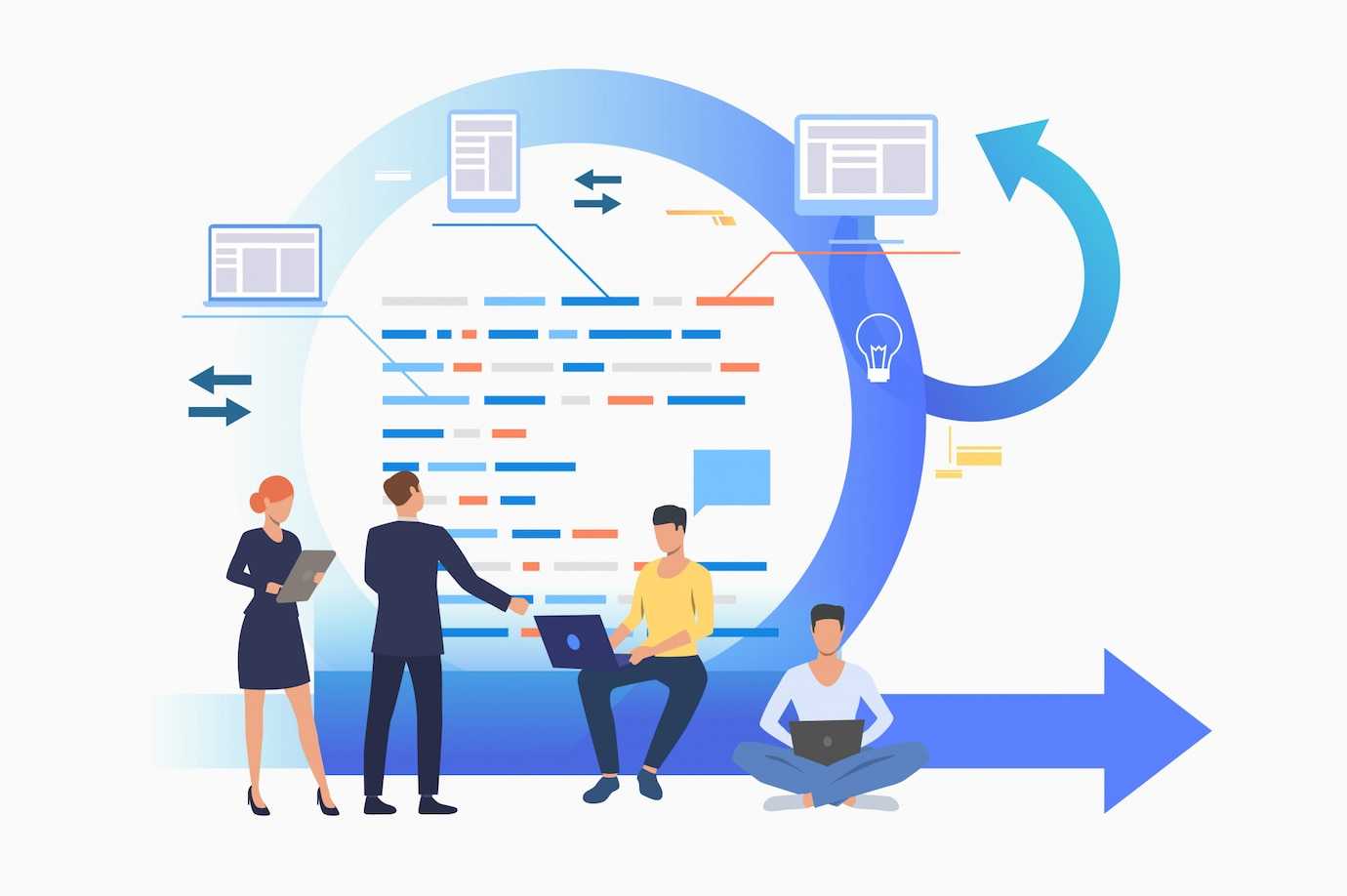
In a very summarized way, agile methods are processes, practices, and tools for managing and developing software in situations where requirement changes are constant.
These methods are much more suitable for software improvement and evolution because they are based on continuous and fast delivery, allowing the product to always adapt to changes and enabling the client to gain competitive advantage.
Software factories usually provide this development model through subscription plans with fixed prices charged monthly, semiannually, or annually.
In practice, by hiring an agile development model, the developer can go deeper, analyzing and testing what works best for the project.
With that, the professional has the freedom to propose, analyze, and start changes without having to negotiate price or costs with the client. The focus here is to identify and adjust changes as quickly as possible.
The point is: even if hiring agile plans is initially an additional expense for the project, in the medium and long term it is the option with the best cost-benefit.
Clients who choose agile methodologies can save much more than those who choose traditional methods, including waterfall.
So, we can say that agile methods are much cheaper if your project needs modifications and updates.
The best time to apply the agile method is during or right after the execution of the first build cycle of the system or app.
That way, the same professionals who developed the software will be responsible for updating it, already knowing all the details about your company’s plans and goals.
This avoids, for example, team knowledge loss, as discussed in this scientific article written by researchers from the Federal University of Santa Catarina.
In addition, this is the moment when the first mandatory and necessary changes appear for your business to start scaling and finding the monetization model.
Below, we separated two very common questions digital business entrepreneurs have when they face the need for change and agile methods.
Waiting for a problem to appear is not a good option because once the customer finds a blocker (whether usability or security), they most likely will not give your business a second chance. Lost sale for sure.
In addition, if there isn’t an exclusive support team for your project, hiring a new one will be expensive and it will take time until all problems are solved.
Even if you look for the company that developed your custom software, the professionals who worked on the first lines of code of your system will be in other projects with different problems.
You will need plenty of time to update them on what was built and what happened since the end of the first development cycle.
As we said at the beginning of this text, one of the main concerns of digital business entrepreneurs is to find the monetization model as soon as possible. With the costs invested in software development, it’s understandable to reach the implementation phase anxious to acquire customers.
However, in many cases, several experiments and product/service updates will be necessary until you reach the right and sustainable profitability model.
Sometimes the customer is not willing to pay an annual subscription for a wine delivery service, for example, but may like to buy beverages on demand. If the app doesn’t adapt to this behavior, it will lose the sale.
An online school may find that a student thinks it’s more interesting to pay a cheap subscription and get access to all available classes than to invest in a single course. Access must remain easy and intuitive in both situations.
This is an important topic: applying agile methods does not necessarily cancel the waterfall method. In other words, it is possible to follow both development models.
In this case, the client starts with an initial planning contract in fixed scope, covering a series of pre-established activities; and then signs another contract that covers continuous improvements and new features.
The hybrid approach (fixed and open scope) is the smartest way to move forward—and the model X-Apps customers praise the most.
That’s because with fixed scope the project keeps the basic phases and needs of the software, while open scope handles the necessary changes that will arise during system development.
This way, you keep the initial structure pre-established with a safety margin that is fundamental for the success of your business.
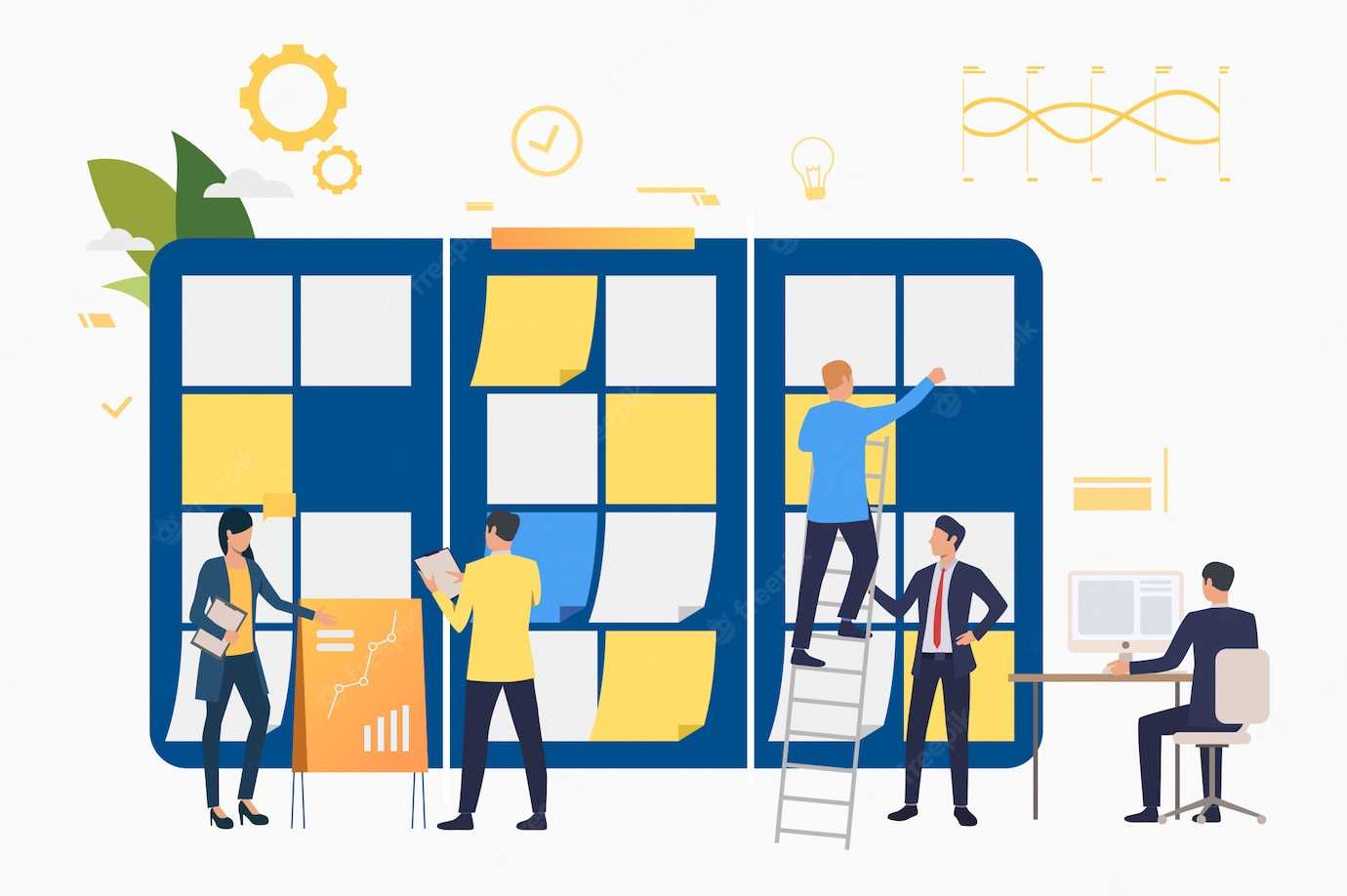
After understanding the importance of continuous improvement for digital businesses and how the agile method is the best way to apply it, let’s get straight to the point: ignoring the need for system evolution can be crucial for the survival of your business.
After all, without updates your system becomes outdated and you can miss good business opportunities.
To give you an idea, Google recently announced that more than 900,000 apps that haven’t received updates in two years will be removed from the Play Store. And Apple is also getting organized to clean up forgotten apps.
But store removal is not the only risk of maintaining outdated software.
As we’ve seen, in the current context of high competitiveness, choosing continuous improvement is strategic for the survival of a digital business. In software, that means frequent updates so the system remains relevant, competitive, and fully functional.
The best way to do this in practice is to develop the system (web or mobile) with the help of agile methods, in a model that combines the advantages of fixed scope and open scope.
That way, it’s possible to identify improvements faster, save time and money, and still maintain what was initially planned in the project.
Thinking about the importance of continuous improvement for the success of digital businesses, X-Apps created its own agile support service for software development: DevOps Operation.
With this service, you can hire a plan to handle your system’s most diverse needs and complexities in an agile and personalized way.
This way, we take responsibility for all improvement activities, performing preventive, evolutionary, and adaptive actions according to the contracted support.
Do like Apple and the biggest tech companies in the market: have support for continuous improvement of your digital business. Talk to one of our specialists and ask about our plans.
>> Blitzscaling: discover Amazon’s business model
>> IT outsourcing: what it is, how it works, and its benefits


