

Reading time
3
min
How to turn your company into an exponential organization
“One thing you can be sure of: Silicon Valley culture has a lot more to do with your company than you might imagine.”
When I visited Silicon Valley for the first time, about five years ago, the way I work changed completely. As someone who has always been passionate about technology, I found myself not only in front of the biggest innovation and tech companies in the world, but also immersed in a working mindset that was completely outside the box.
In Silicon Valley, one rule holds: “Update—or die.”
When I realized what that motto meant in practice, I knew that to increase the success of the company I had just created at the time, there was only one option.
It was through Silicon Valley culture that I understood that, even if your company is not (yet) a unicorn valued at more than US$ 1 billion, you can still embed innovation and technology at the core of your work—just like giants such as Apple, IBM, and Google do.
Because more important than presenting yourself as a modern company that always offers the best to customers is to live an agile way of working—one that focuses not only on the final delivery, but also on the processes that make that delivery an increasingly modern, practical, beautiful product that pays close attention to customer experience.
In this content, I want to show you how Silicon Valley culture helped me—and what it has to do with your business.
To do that, we’ll take a tour through Silicon Valley to understand what it is, how it started, why it generates so much money, and, most importantly, the lessons from this universe of entrepreneurship, technology, and innovation.
At the end, I’ll make you a very special invitation: to get to know Silicon Valley mindset and culture through the eyes of people who work there—in a completely different way.
Are you in?
Silicon Valley is today the largest technology hub in the world. Also considered the birthplace of IT innovation, most of the time it is where major tech trends adopted in many other countries are born.
Located in California, on the west coast of the United States, it is home to many of the world’s biggest tech companies, such as Facebook and Google.
Contrary to what many people think, Silicon Valley is not exactly a city. In fact, it is a region within the San Francisco Bay Area that includes several cities, such as:

One of the characteristics of Silicon Valley that I liked the most when I visited this amazing place for the first time was exactly this capacity companies have to invest in novelty—to bet on disruption.
To me, defining Silicon Valley goes far beyond summarizing it as big tech companies. It is a place where both entrepreneurs and students embrace new ideas to develop something that, in a while, will change the old way of doing things.
Months before traveling to the United States, I started researching everything I could about Silicon Valley. I wanted to understand what the mindset of the world’s biggest companies was and how it worked.
Or rather, I wanted to understand where all of this came from.
At the time, I was already planning to create a new company focused on building apps and software in general (yes, that company is X-Apps today) and I saw Silicon Valley as a completely innovative business model.
It was during this search for more information that I read about the history of Silicon Valley and discovered it is completely different from what many people imagine.
Because it definitely didn’t start with huge multinationals, unicorn startups, and investors from all over the world.
In fact, Silicon Valley history begins with just eight entrepreneurs who together founded the first company in the region (and it still exists today): Fairchild Semiconductor.
In 1955, William Shockley, a Nobel Prize–winning physicist and semiconductor (chip) researcher, returned to the inland area around San Francisco where he had grown up to found his own company.
At the time, he had just won the prize and used his international recognition to recruit researchers willing to work with him. These professionals came from the then major IT hubs in the country: New York and Boston.
Un(fortunately), the plans didn’t go as he imagined: Shockley’s company failed. But, unlike what many would do, they didn’t give up. On the contrary, they met an investor from New York who bet on their idea and, as a result, they created Fairchild Semiconductor.
Shortly after, with the company’s growth and network expansion, Fairchild began its first sales to the giant IBM and to the U.S. Government.
After almost 10 years, the company was already a success: it generated US$ 90 million per year and employed 4,000 people.
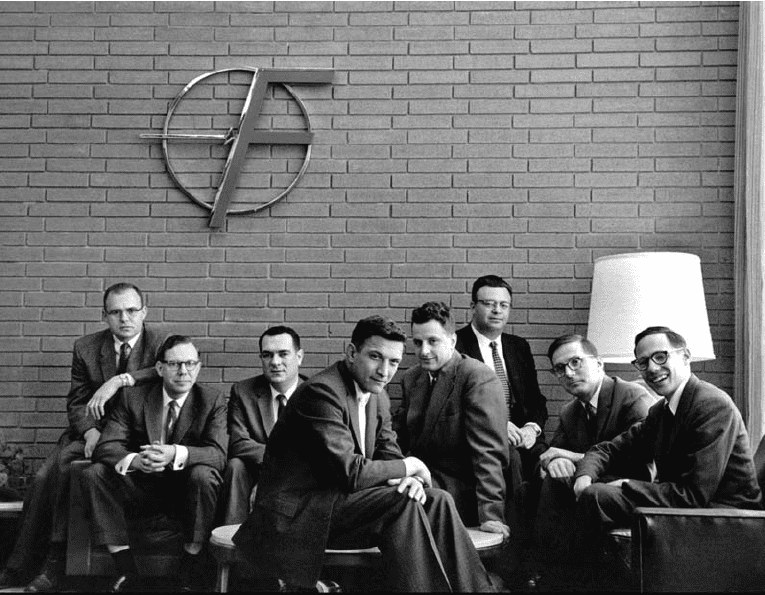
I like to tell Silicon Valley history because Fairchild’s legacy made many people who love technology—like me—see entrepreneurship as a possibility.
It’s hard to think that, in a region where there was practically nothing, a single company opened the door for hundreds of others. Fairchild itself became an epicenter of spin-offs—that is, businesses that were born inside the company.
Intel, for example, was born that way.
The Silicon Valley culture you know today—innovation and entrepreneurship—was born with them.
In addition, as the region grew, new companies were created and the business model, until then applied only by companies there, began to be exported to many places around the world.
Including your company: today, you probably consume a lot of technology from the region, such as chips, computers, smartphones, and so on.
If I had to summarize Silicon Valley in a few words, they would certainly be: entrepreneurial culture.
I say that not only because of the creation of X-Apps—which drew a lot of inspiration from that mindset—but also because of the very environment of the place, which today is synonymous with innovation and technology.
Of course, with all this protagonism, it’s natural for other companies to ask: what is the secret of this region’s success? I asked myself exactly that, because I wanted to replicate this business model in my company.
Fortunately, after some time building a business and getting to know the reality of many other companies, I understood there is a problem with that question (and not everyone stops to analyze this):
The truth is that there is no magic recipe that will make you sell ten times more just because Silicon Valley companies work in a certain way.
Why?
Because, in business, different companies require different strategies, including because their goals vary widely from one company to another.
So, thinking about it, perhaps the better question to ask is:
During (and after) my trip, I took some notes about that. In them, I listed the five Silicon Valley characteristics that stood out the most to me:
In Silicon Valley, the new doesn’t scare—it inspires. And that is, by far, very easy to notice. The region’s own history shows outsiders that the watchword is: explore.
You may not know this, but Silicon Valley, in the late 1840s, experienced the Gold Rush. That moment brought many people in search of opportunities related to mining.
As you can imagine, not everyone managed to do well in that business. That’s why those same people had to reinvent themselves, since going back home was no longer an option.
So what did they do? They saw entrepreneurship and innovation as a new opportunity for growth. What they perhaps didn’t imagine was that, with that behavior, they would create a whole exploratory mentality in the region.
People wanted to build businesses, to invest, to offer something different from everything that had been done. Apparently, it worked.
Want a very famous example? Airbnb.
Created and tested first in San Francisco, the company’s business model is one of those ideas that had everything to fail if it had been implemented somewhere else.
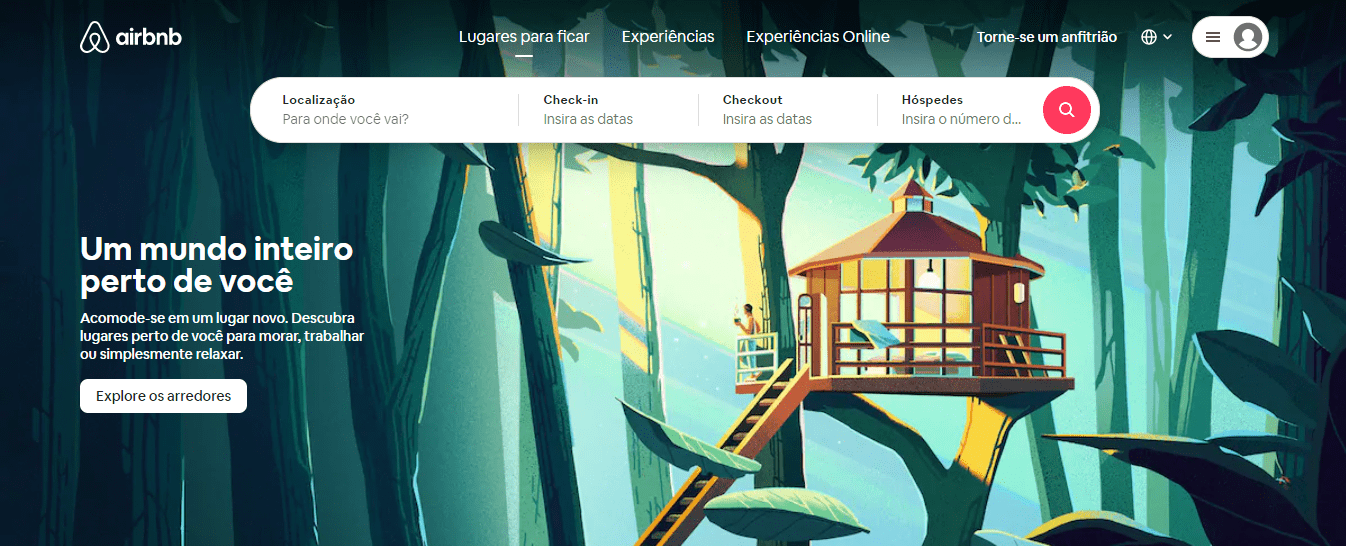
First, because residents could reject the idea of hosting a stranger at home. Second, because investors would hardly bet on that.
Silicon Valley’s exploratory mentality doesn’t apply only to companies born in the region. It extends to classrooms too.
When I visited Google’s campus in Mountain View, it wasn’t hard to find students from local universities with laptops on their laps or in their backpacks.
Even though I didn’t stop to talk to them, the reason they were there was clear to me: both Stanford University and the University of California maintain partnerships with Silicon Valley companies.
Those research partnerships and training initiatives strongly contribute to the success Silicon Valley is today.
Just so you understand: in these institutions, professors teach not only the basics of technology, but also encourage students to create their own businesses.
There’s a lot of conversation involved in this process, as well as many tests during the planning and development of these new ideas. This happens both within universities and within companies in the region, which helps explain why so many students from all over the world come looking for new opportunities in technology.
Even though I live in São Paulo and I’m already used to the plurality of cultures from Brazil and around the world, my experience in Silicon Valley went far beyond expectations.
I say that because this cultural impact caused by the mix of languages and behaviors makes the ideas born in the region always have a “very international mindset”.
What do I mean?
Everything developed in Silicon Valley is thought of from an international (even global) scale perspective. Because entrepreneurs are exposed to people from very different realities, this ends up shaping how business is done there.
All that diversity means that, in a development team building a new product, for example, companies take into account ideas from professionals from India, China—and even Brazil.
According to Silicon Valley Indicators, 37.8% of professionals working in Silicon Valley are foreign-born.
In everyday life, according to the same study, that means that every 24 minutes a new professional arrives in Silicon Valley.
With so many people from outside working in the “same place”, new ideas come up all the time. The best part is that, in Silicon Valley culture, all that creative potential usually converges toward a single goal: entrepreneurship.
It’s incredible (and crazy, at the same time) to think that the developer who works in the same department as you might, tomorrow, have an idea that will revolutionize the world. And the best part: you can be part of it.
Another point worth highlighting about this collaborative spirit is that even a simple friendship can create a great opportunity.
Want an example?
I once read an article about Brazilians who moved to Silicon Valley looking for new opportunities. In the piece, there was a testimonial from an engineering student that caught my attention.
Basically, he said that when he arrived in Silicon Valley to continue his studies, not knowing anyone yet, he became friends with some classmates.
To his surprise, after a few days talking to those people, he got a referral from one of them. That “little favor”, as he called it, created valuable contacts that, months later, helped him land a job at a local company.
Nice, right?
But Silicon Valley wouldn’t be the same if it didn’t go against the current, would it?
Did you know this collaborative spirit isn’t limited only to professionals in the region? Companies help each other too.
Here’s an Uber example.
The company that broke taxi monopolies in many markets created Base Web, a library that gathers the company’s entire design system.
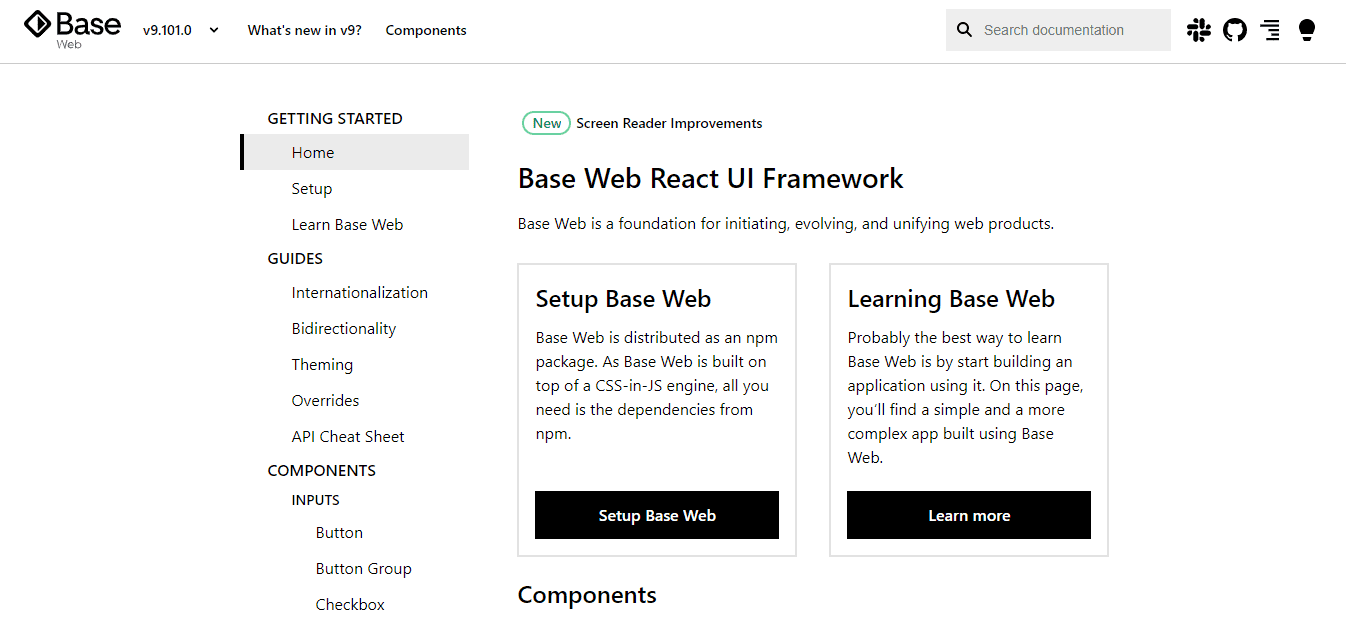
If you’re not sure how this works, Uber essentially made its creation toolkit available so other companies could build their web products on top of the components Uber shared.
This includes a complete gallery of user interface components that makes the work of designers and developers worldwide faster and more standardized.
Here is one of the big “secrets” behind a company’s success.
In fact, if there is a Silicon Valley characteristic I strongly identify with, it is the appreciation of human capital.
Let me explain why. Silicon Valley culture follows a philosophy that goes more or less like this:
It’s useless to have the best technologies in the world if our professionals don’t know how to use them. It’s useless to have a good idea if we have a bad team.
Does that make sense to you?
What I mean is that in Silicon Valley, companies constantly push you to be your best.
I say that because both the region’s average salaries—which, for some roles, can reach up to US$ 120,000 per month—and the culture itself make you want to always have the best ideas.
That’s why they invest so much in a diverse team with a mindset oriented toward the new and that is always relearning and rediscovering things. Because it works.
This way of seeing business was essential for creating X-Apps because, much more than focusing on deliveries, we try to offer a complete experience.
And you definitely can’t do that with technology alone.
For me, being immersed in the region’s culture was very important to understand that the best professionals want much more than a fair salary.
They want to be heard. Or rather: they want their ideas to make a difference in the company’s future.
I say that thinking about X-Apps’ own reality: even working in an IT company, technology has never been the most important factor for us to grow our business. Because even though, day to day, we deal with other companies, behind those companies there are people.
In other words, this process demands a high level of customer relationship skills.
It demands human touch.
It demands a brilliant customer team that will work hard to turn someone merely interested in our services into a converted customer—and our number-one fan.
What I learned from the world’s biggest companies:

The streaming giant that “defeated” Blockbuster in 2011 taught me that, to be disruptive, X-Apps first had to understand its market. Like Netflix did, I needed to study the companies that already built apps and systems to identify gaps—and attack them by offering a well-executed service.

Before Uber revolutionized how people request rides and broke taxi monopolies in many markets, it understood competitors’ flaws and, most importantly, people’s needs. Like them, we dug deep into our customers’ customers’ pains to answer a single question:
How can we transform your web experience today?
Learn how X-Apps helped Polishop increase its rating from 3.6 to 4.6 on the Play Store

When Steve Jobs presented the iPhone to the world in 2007, he not only brought together the concept of the iPod and the cellphone in one device, but also combined beauty, practicality, and functionality in a single product.
Here at X-Apps, we do something similar when we put our expertise in DevOps and UX/UI together to deliver, in one product, quality factors such as cutting-edge technology and an excellent user experience.
The world’s largest accommodations network doesn’t own a single property. Aware of that, Airbnb bet on experience, turning the brand concept into something memorable.
Like the accommodations, I usually say that the digital products we deliver are just the tip of our work. Our true differentiator comes before that: personalized service and a deep understanding of the customer’s project. Focus on that.

The company that started in a garage is now the largest marketplace in the world. Amazon understood that, to scale, it needed to diversify its offer. That is what we did: inspired by the American multinational’s trajectory, our business model—previously focused only on building apps and web software—expanded to include allocating professionals to external teams and DevOps support.
When I decided to create X-Apps, unlike what many might think, my first (and biggest) goal was never to sell millions in a month or conquer the world right away.
Of course, that would be great.
The truth is that when I started building a business in this highly competitive area of technology—web software development—I wanted just one thing: for someone to trust the work we were offering.
Yes, because managing a company that exports technology every day is definitely not easy. In addition, at the time, there were already big players in the market. That means my biggest challenge then was to understand:
How to position X-Apps in the market and start prospecting the first customers, considering all this competitiveness.
After a few days thinking about the answer, I arrived at three pillars that were—and still are—fundamental to the company’s growth:
One of the most important lessons you will learn by visiting Silicon Valley—or studying it—is that, in that region, a company’s culture says a lot about its future.
When I returned to Brazil, with a suitcase full of knowledge, I knew that to succeed with X-Apps I first needed to understand what motivated me to invest time in that work.
Paraphrasing Steve Jobs:
“The only way to do great work is to love what you do. If you haven’t found it yet, keep looking.”
In addition, I also knew that even before building a team I would have to understand the essential aspects that would guide the mentality of those people. That includes:
And even our jargon.
Today, I can say with confidence that the opportunity I had to be inspired by the best in the world was one of the factors that most contributed to X-Apps getting where it is today.
Because experiencing Google’s way of working or Amazon’s way of scaling helped me discover what is really behind X-Apps:
We always learn because we never know enough.
We listen to every idea to bet on what’s best.
We want passionate people because we love what we do.
So, if there is one piece of advice I can give you, it is: focus on your company’s culture.
Pay close attention to that. After all, it is the base that sustains the entire business. Learn how to communicate with your team. Learn how to align that communication across departments.
And strengthen it every day with your professionals—whether in a customer meeting, an internal meeting, or an event to celebrate the quarter’s strong numbers.
Believe me: it makes a big difference.
Considered one of the most strategic processes for a company’s success, hiring new professionals in Silicon Valley is taken very seriously.
That’s because the region’s culture is very clear about selecting new talent. Basically, it tells anyone who wants to enter the market:
It’s not enough to be good at what you do—you need to be the best. You need to master what is best.
I don’t know if you work exactly with technology; you probably do. But if you’re not very familiar with the area, I’ll confess something to you:
It is very hard to hire good DevOps professionals. And it is even harder to keep those people in the company. Do you know why?
Because today the IT market faces a serious shortage of specialized professionals—a problem that became even bigger due to the new coronavirus pandemic, which forced companies to accelerate their digital maturity like never before.
So, on one side I had Silicon Valley culture, which accepts only the best. On the other, I had a market struggling to find those professionals.
That’s why, looking at X-Apps’ journey so far, the main lesson I took from all of this was to value human capital.
That is what the best companies in the world do. And that is what we did—and are still doing.
When I talk about valuing human capital, I mean that, in practice, you need to:
With those actions, believe me, it’s only a matter of time before results show up. I say that based on our own experience:
Anyone who looks at our portfolio today—with some of the largest brands in the world—can’t imagine that our first product was an app for a beauty salon in the city of Santo André.
That growth was only possible thanks to heavy investment in hiring great professionals. Without that, it would be hard for us today to negotiate with one of the largest banks or with a national retail giant.
I’ve said this before, but the truth is: I’m passionate about technology. Not only because I’m trained in programming, but because I’ve always seen technology as an opportunity to build a business.
When I went to the United States, my main goal was exactly to discover which technology trends were being used by the world’s largest companies.
Because I knew that, for X-Apps to stand out in the Brazilian market, bringing those references in app and system development straight from Silicon Valley would be a great move.
So I looked for ways to learn not only during the trip, but also after it. How?
By talking to local professionals on LinkedIn, exploring the websites of the biggest companies there, and—of course—listening to our software engineering team.
After all these exchanges, I compiled some of the main tools we could start using. They were:
Of course, after some time we improved our tech stack. Today, with much higher digital maturity, our set of technologies is even broader.
Because talking about technology can feel distant for those who think it is merely an execution tool. The truth is that technology is the company’s core—it is what makes the “bridge” between your business and your customer.
It is also what determines whether you will be able to deliver the ideal solution to them.
So, want some advice? Rethink as soon as possible both the technologies you use and the way you optimize your work with them.
Because technology is only truly valuable when it:
Here at X-Apps, we don’t take pride only in using the same technologies as the biggest Silicon Valley companies. Because that alone doesn’t solve our problem.
We take pride because those technologies push us further. They help us deliver an amazing app for one of the largest automakers in the world. And they make us feel fully accomplished when we receive messages like this:
In a few days, we’ll take part in one of the biggest technology events in the world. We want to see you there.
We are sponsors of the Silicon Valley Web Conference and we will have a room with exclusive content for you. Speakers include professionals from Facebook, Nvidia, and Google.
In addition, we’ll have a fully digital booth with specialists ready to answer your questions about app and software development. Join the free event.


