

Reading time
5
min
What is DevOps?
A closer look at how drivers are treated by the company makes it clear that Uber uses behavioral psychology inside the app. Executives say it’s to improve the driver experience, while using this resource—without scientific proof—suggests the goal may also be quite profitable for the startup.
To understand how far this interaction goes, we first need to understand what behavioral psychology is and how it can operate in a business context.
Focused on behaviorism, behavioral psychology argues that behaviors—functional or dysfunctional—are learned and can change through immersion in new behaviors. It’s as if thoughts, feelings, and behaviors can be stimulated (or manipulated) to create new attitudes and new ways of thinking or experiencing emotions.

In therapy, all of this happens in a clinical setting. Therapists identify limiting behaviors that cause suffering, pain, or social and emotional harm; try to understand how and why they occur; and then seek other behaviors to replace those considered dysfunctional.
And, according to what’s said out there, that’s roughly what Uber has done with its drivers—but instead of individual improvement, the startup’s goal would be to increase profits by influencing the behavior of its workforce.
Uber doesn’t have employees: each driver who signs up in the app is free to start working whenever they want—and they also don’t have a fixed time to stop. This is literal: anyone who wants to go offline can do so at any time, with no penalty for either side.
Because it has no formal employment “ties” with drivers, Uber also can’t simply require them to drive at times they don’t want to, or in places they’d prefer to avoid.
That’s where the claim comes in that Uber uses psychology to make these independent professionals follow “work instructions” without even realizing they’re being instructed.
Through techniques involving charts, video game-like mechanics, and extensive research by psychologists and social scientists working for the app, Uber can convince drivers to take routes they’re not used to, or even to work more for less money—making each person believe this is the best possible way to work.
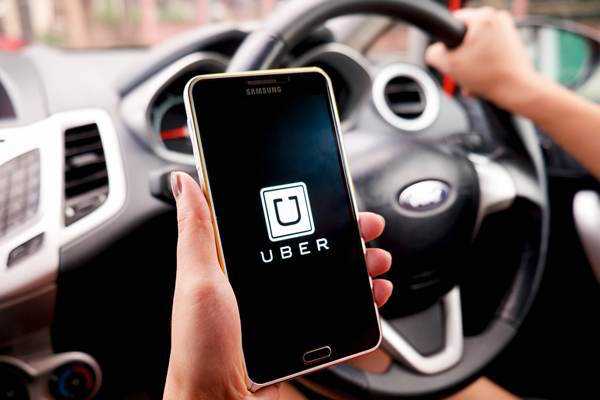
Specialists in the field believe Uber uses behavioral psychology to influence driver income through the data the system has about each driver and the control it has over the transaction interface on each device. In that sense, it’s as if the app can dictate where the driver should go without the driver fully realizing why they’re doing it.
If you are—or have been—or know an Uber driver, you know the app sends pop-ups with encouragement messages for “sure” rides. For example: if there’s a concert at a stadium, right as the show is ending, a reminder appears in the app saying something like: “The show is almost over, and people will need you there!”
That way, someone who is far from the venue can feel encouraged to go there and, eventually, get some rides.
So far, so good: it’s the law of supply and demand. What’s implicit is that sometimes the person has already worked too much that day and wanted to rest, but ends up picking up a few more passengers leaving the show to make extra money. The price for the driver may remain the same; for the passenger, dynamic pricing kicks in, where prices rise due to high demand.
Uber says the experience it creates by sending these notices is realistic and beneficial because it helps drivers understand—or increase—their daily driving limits. Many drivers also don’t see anything wrong with these initiatives by the app, since they can add a bit more to the final total.
The question is: would your company or startup be willing to use behavioral psychology in your websites or apps? The answer—and the consequences—can vary. Only real attempts can ultimately show what the reality will be.
Want to understand better how it works? Contact X-Apps!


