Índice do artigofaltam 4 min de leitura
In 2018, Grupo GPS field teams recorded service quality in an app that only existed for Android phones. The company's leadership used iPhones, and there was no version for them. To build one, the starting point was missing: the app's code and the manual that explains how it talks to the company's system. The only reliable description of the system was the Android app itself, running, and that is where X-Apps started from to build the iPhone version.
A system the operation depends on and nobody can describe
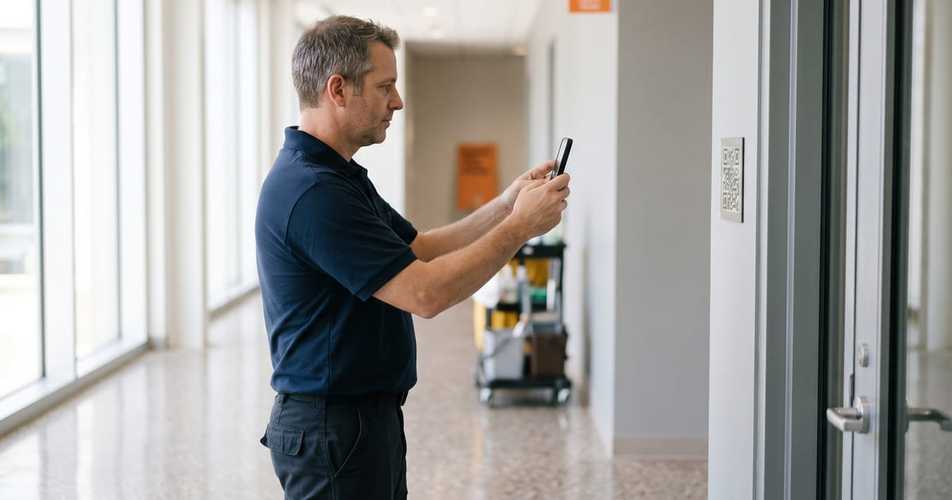
Grupo GPS provides outsourced services inside large clients, with teams spread across those contracts. At the inspection point, the supervisor scans a QR code in the area, the app opens the checklist for that point, and leadership sees the quality of the service without waiting for paper or a spreadsheet sent later.
A company usually ends up in this situation when the contract did not mention handing over the code, when whoever built the system left, or when the app was published under someone else's account. At Grupo GPS, that was the starting point: an app in use, which operations depended on, with no code and no manual.
Whoever is in that position is held hostage. Taking the system to another device, changing who looks after it or changing a rule first requires finding out, in the dark, how it works today. This applies to the field app and it applies to the ordering system or the customer portal built by third parties. The project is from 2018 and is relevant now because the way out is still the same.
About three hours per feature before building
With no code and no manual, the X-Apps team studied the Android app in operation, one feature at a time, and wrote down what it asked of the company's system and what it received back. According to the project record, each feature took about three hours of observation before any line of code. It is the expensive path, and it is what is left when the code is not at hand.
The Android app kept changing during the project, without notice, and the company's system had flaws that showed up even in the old app. Grupo GPS received test versions of the iPhone app throughout the work, and not just at the end.
Another stumbling block came from the checklist. The rules for each area differed from one another and, in some places, did not match what the Android app did in practice. With rules that contradicted each other, the team needed to know which one applied, and the answer came from a conversation with the client, recorded in a document with what really applied, area by area. Since the rules varied by area, the team built a single screen that adjusts to each of them without being reprogrammed.
Published, adjusted the next day and handed over to the client
The app reached Apple's store in September 2018. An adjusted version came out the next day: according to the Grupo GPS case, the app became 50% smaller, and the time it waits for a response from the company's system was adjusted, which matters for those inspecting where the signal is weak. During the warranty period, the team monitored the app every day.
Before the project
Only the Android app running- No iPhone version
- No app code
- No manual on how it talks to the system
- Checklist rules that contradicted each other
At the end of the project
In Grupo GPS's name- iPhone app in Apple's store, under its own account
- iPhone app code
- Manual on how the apps talk to the system
- Rules in writing, area by area
The Android code was not part of the delivery. But the missing manual came to exist and applies to both apps, because both talk to the company's system in the same way. Grupo GPS took over maintenance of the iPhone app.
This is what the Grupo GPS systems manager said about the work, after delivery:
X-Apps served us with excellence and agility in developing iOS apps, showing know-how in other technologies as well and allowing us to build a partnership for new projects.

What to check in your system before you need it
You can do this today, without calling anyone, with whoever looks after the system beside you:
- Ask where the code for the system and the app is stored, and whether the company has access to it without depending on anyone.
- Check whose name is on the Apple and Google accounts the app is published under.
- Ask for the manual that explains how the app talks to the company's system; if it does not exist, write that down.
- Check whether the rules that change from one area to another are written down somewhere outside someone's head.
- In the next contract, write that the code, that manual and the store accounts stay in your company's name at the end of the project, and that you receive test versions throughout the work.
If any answer is not what it should be, the first step is to request that the store account be transferred to the company's name and to get a copy of the code, before any change of vendor.
Source: the Grupo GPS (GPSi app) case page and the project record, from X-Apps.