
Índice do artigofaltam 7 min de leitura
No customer will choose you because your login works. Build what they choose and connect the rest.
Every platform project starts with a list of features, and that list almost always mixes two very different things: what only you can do and what the market has already solved for everyone.
Separating the two before budgeting usually changes the size of the project. It is the difference between building a product and rebuilding the infrastructure every product uses.
Article summary
- Every feature list has items that differentiate the product and items any software is required to have, and the second group is usually larger than it seems.
- The one-question test: would a customer choose you because of this? If not, it is a candidate to connect rather than build.
- A component regulated by a third party ages on its own, and taking over its maintenance means inheriting changes you do not control.
- The mirror-image mistake exists: assembling a product only from third-party parts produces something any competitor can assemble the same way.
The calculation that changes the project: what is yours and what belongs to everyone
The feature list of a new system is misleading because it treats all items as equal. "User registration" and "optimized delivery route calculation" take up one line each, and only one of them is the reason someone would buy your product.
The cut that organizes the project is between differentiator and commodity. A differentiator is what you do better than the rest of your industry, what came from your operational knowledge, what a competitor would have trouble copying. A commodity is everything every piece of software needs to have and nobody praises.
| Type of item | What to do with it |
|---|---|
| Differentiator | Build it. It comes from your industry knowledge and is the only reason anyone chooses you. |
| Commodity | Connect it to a service that already exists. It needs to work and is never praised. |
| Supporting structure | Assemble it with ready-made parts, adjusting only what your product requires. |
The proportion between the three groups varies a lot from project to project, and we do not have a standard split to recommend. What repeats is the order of importance: the differentiator is usually the smallest of the three groups and the only one that justifies the project's existence.
The one-question test to separate commodity from differentiator
One question settles the classification of most items: would a customer choose you because of this?
Nobody switches vendors because the login works. Nobody recommends a system because it sends email. Nobody pays more because the password can be recovered. These items need to exist and are invisible when they work, which is the practical definition of a commodity.
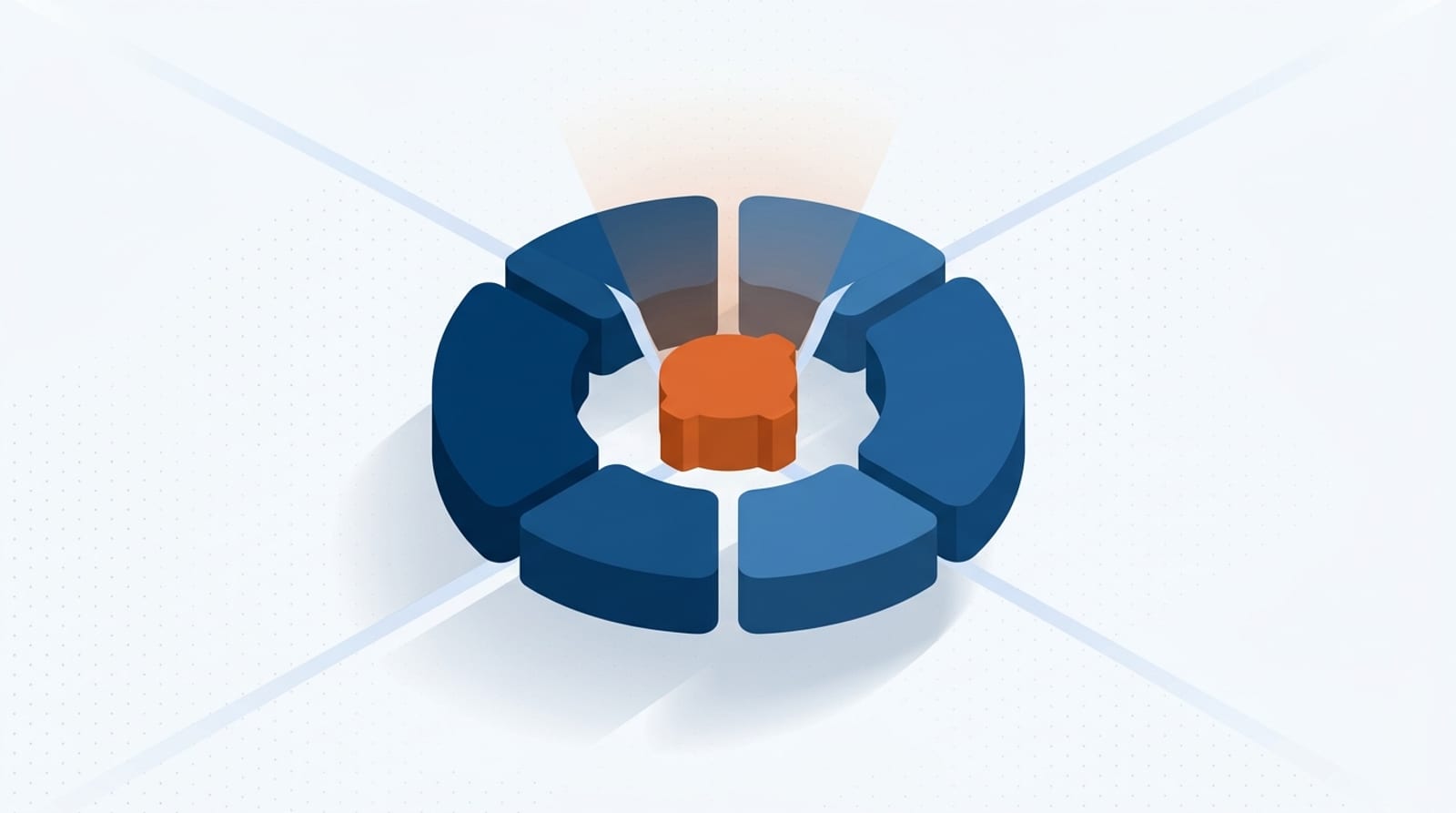
Now apply the same question to what came from your industry knowledge: the control nobody does right, the report every business owner in your field wants and no system delivers, the rule that prevents the loss that always happens. Then the answer changes.
That part needs to be built, and it needs to be built well. It is the only place in the project where spending more time pays off directly in sales.
There is a confusing intermediate case: something that is a commodity in the general market and a differentiator in your industry. Issuing documents is a commodity; issuing documents with the particularities of your field may be exactly the reason for the purchase. The question still works, as long as you ask it with your buyer in mind and not software in general.
What is almost never worth building from scratch
Some components almost never pay off to build, and the reason is not technical difficulty: it is that they change whenever third parties decide and require permanent maintenance.
- AuthenticationSecurity rules change and a mistake here compromises everything.
- Recurring billingPayment methods, retries and reconciliation are a whole product.
- Messages and notificationsDelivery depends on reputation and on carrier and platform rules.
- Tax invoicingThe rule belongs to the government and changes without asking your roadmap for permission.
- Maps and addressesA geographic database needs to be updated continuously by someone.
- File storageCost per volume and availability are already solved and cheap.
What these six have in common: the rule that governs each one belongs to someone else. Taking on the construction also means taking on tracking their changes, forever, with a team that should be working on what differentiates the product.
What is almost always worth building
It is worth building everything that carries your industry knowledge, because it is the only part the buyer cannot find elsewhere. The rule is simple to state and hard to follow, because this is usually the most laborious part of the project and the easiest to postpone.
Three categories concentrate almost all the differentiation of an industry platform: the business rules that translate how that market works, the reading of the data that turns operations into decisions, and the workflow that lets the customer's team use it without long training.
The third item is the most underestimated. Workflow does not show up in feature lists and is what decides whether the customer keeps using the product after the first month. A system with the right features in the wrong order loses to a simpler one that respects the routine of the people doing the work.
Buy ready-made, integrate or build: how to decide each item
Each item on the list has three possible destinations, and the choice depends on two things: how much it differentiates the product and how much it is regulated by third parties. Putting the two axes together settles most doubts.
The top-right quadrant is the one that causes the most scope mistakes. That is where the cases sit in which your industry's rule is a differentiator and the execution is a legal obligation, and the right answer is to split: the intelligence stays on your side, the regulated execution stays with whoever already maintains it.
This unlocks cost in two ways. The project shrinks because you stop rebuilding what already exists, and future maintenance shrinks because the part that changes at third parties' discretion stops being your responsibility.
The spreadsheet that forces the decision
A feature list with a cost next to each line changes the scope conversation. It is the artifact we use alongside proposals: instead of a single fixed total, the client receives the price of each feature and builds the first version by choosing what goes in.
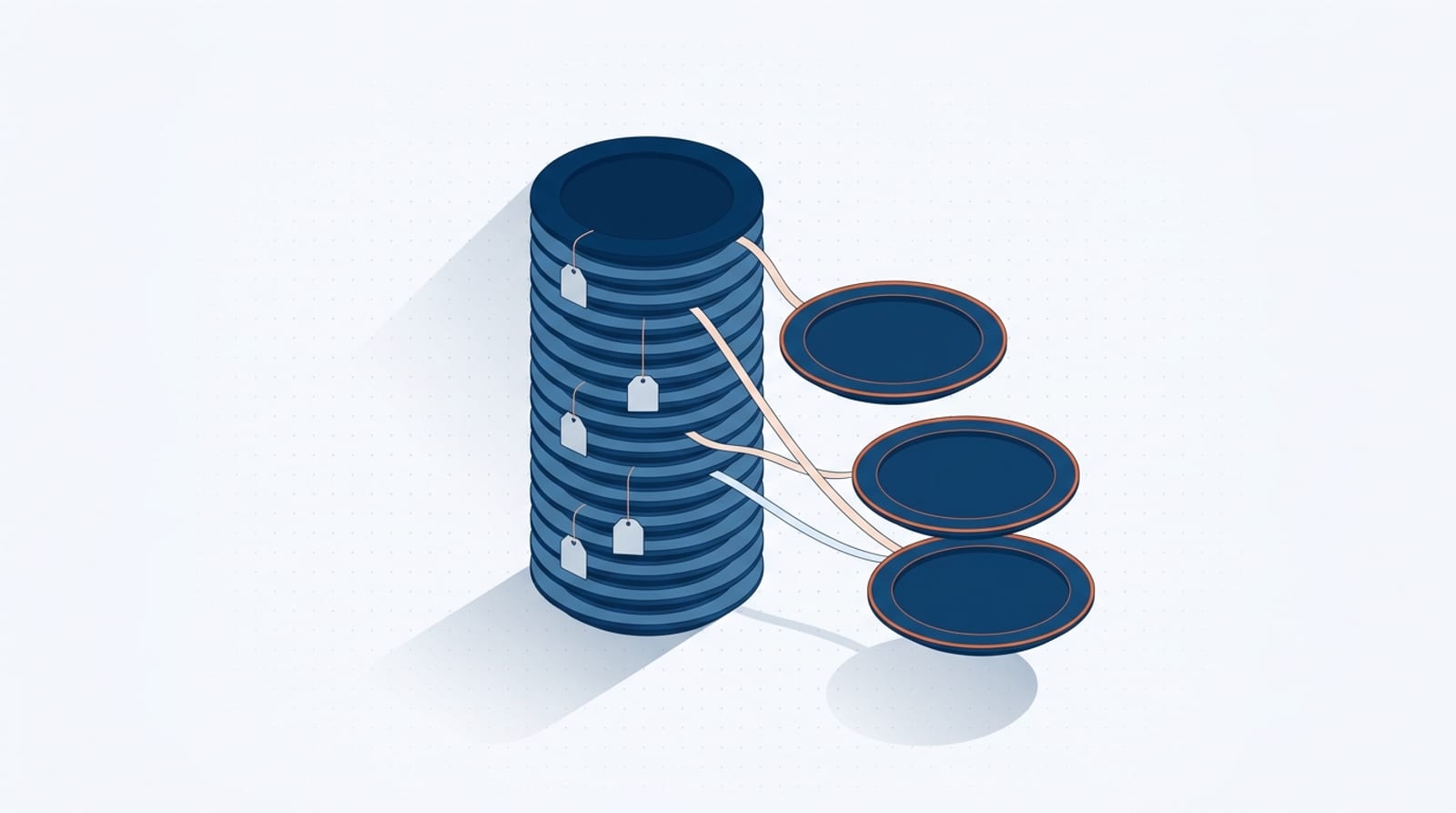
The effect is immediate. When each item has a visible price, the question stops being "does it fit the budget?" and becomes "is this worth what it costs?". Items that seemed mandatory drop out on their own, and money is left for what really differentiates.
It is also the moment when the classification in this article turns into money: marking which lines are differentiators and which are commodities, and checking whether spending is concentrated in the right group. A first version that spent most of the budget on commodities was expensive and built no advantage at all.
The mistake of buying everything
The mirror-image mistake exists and is discussed less: assembling the whole product from third-party parts and building nothing. The result is quick to deliver and has nothing that can sustain a sale.
What assembly delivers
- First version live in less time.
- Lower and more predictable initial cost.
- Mature components, with problems already solved.
- Fewer people needed to get started.
What it does not deliver
- Anything a competitor cannot assemble the same way.
- Control over vendors' prices and terms.
- Freedom to change what the component does not anticipate.
- A reason for the customer to choose you over the competitor next door.
There is also a concrete dependency risk: the price, availability and terms of third-party services change at the vendor's discretion. You manage this by choosing replaceable components and keeping the business rules on your side, so that switching vendors is laborious rather than impossible.
The honest yardstick: assembling is the right decision for everything that does not differentiate, and an insufficient decision as an entire product strategy.
What to do with what was left out of the first version
What was cut from the first version is not trash; it is a queue. Recording that queue with the reason for each cut is what keeps the discussion from starting over at every new meeting.
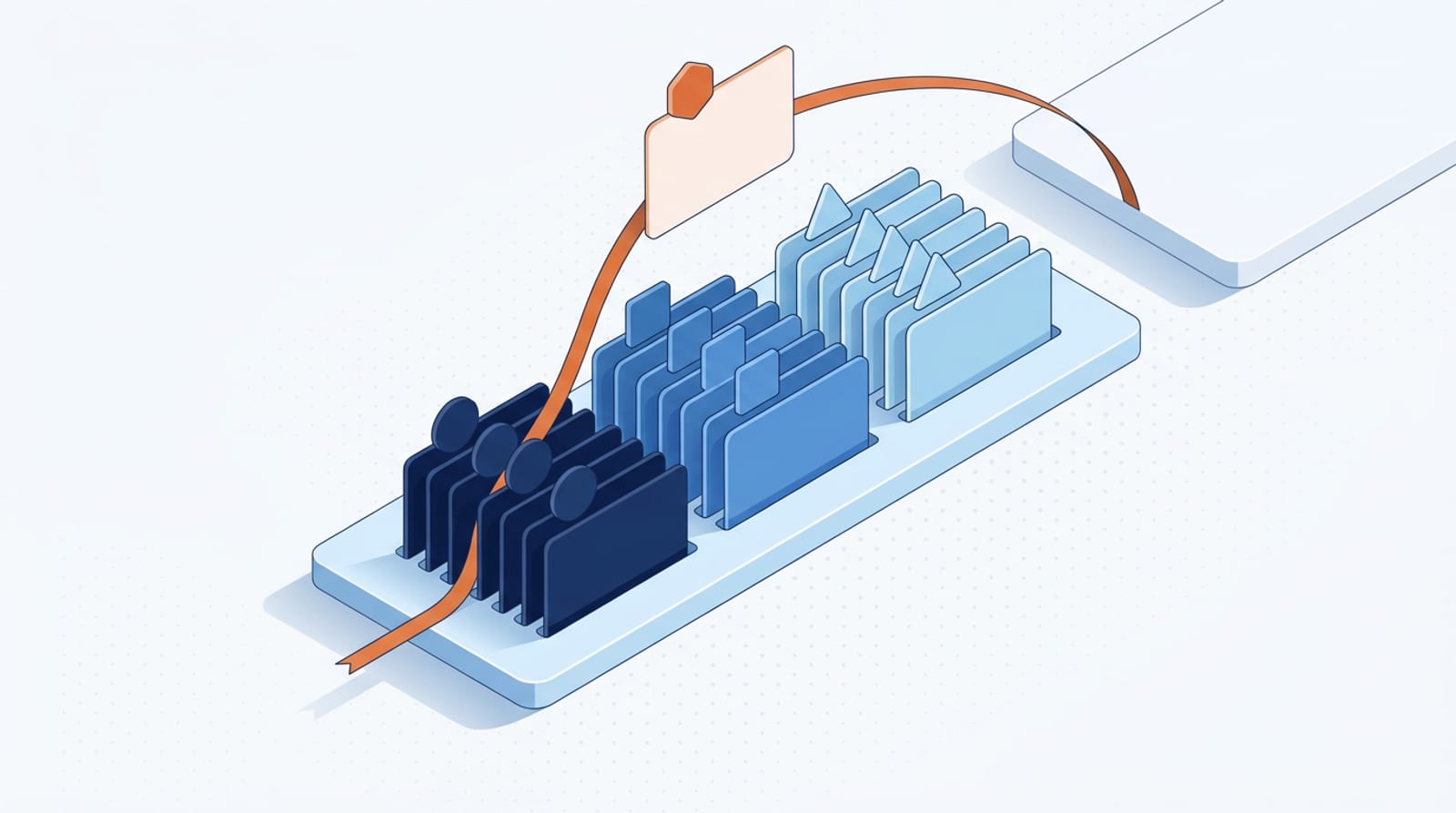
The re-entry criterion that works is real demand, not nostalgia for the original scope. An item comes back when a paying customer asks for it, when it blocks a concrete sale, or when usage shows its absence is generating repeated manual work.
Without that criterion in writing, the queue becomes an old wish list nobody looks at, and the scope decision is redone from scratch at every meeting.
It is worth recording, next to each cut item, the reason for the cut: whether it was a commodity that is now connected, a differentiator postponed for time reasons, or a request from a single operation. The three come back by different paths, and the third usually does not come back. How to handle that third category is covered in Customizing the system for each client: when it becomes a product or a project.
Frequently asked questions
Ask whether a customer would choose you because of it. Nobody chooses login, billing, notifications or tax invoicing. What you do better than the rest of your industry is what they choose, and only that needs to be built from scratch.
It gives you control and charges you maintenance. Every component you build is yours forever, including when the external rule changes. It makes sense for what differentiates you and rarely makes sense for what everyone is required to have.
Price, availability and changes in terms, which you do not control. You manage this by choosing replaceable components and keeping the business rules on your side, so that switching is laborious rather than impossible.
Authentication, recurring billing, messaging, tax invoicing, maps and file storage. These are solved problems, regulated by third parties, and they age on their own if you take over the maintenance.
No, because assembly also costs money and because a product made only of third-party parts has nothing that sets it apart. The mirror-image mistake of building too much is assembling a system any competitor can assemble the same way.
By listing each feature with a cost next to it and marking which ones are differentiators. The conversation stops being about the total amount and becomes about which items deserve to be built now.
Sources and method
This article describes the sales and scoping method X-Apps applies to platform proposals, including the practice of delivering project alternatives together with a spreadsheet of cost per feature, in which the client builds the first version. The case that originated the text is an August 2026 negotiation with a restaurant operator who intends to sell software to other restaurants, and it has been anonymized.
The classification between differentiator and commodity presented here is a decision criterion, not a measurement. We do not use market proportions because we do not have our own basis to state them.