Índice do artigofaltam 7 min de leitura
The first "yes" is free. The fifth costs you the product.
You sold to your third client and they ask for something small: an extra field on the sign-up screen, an approval step their company has, a report with a different column. It takes little time, unlocks the contract and the client is happy.
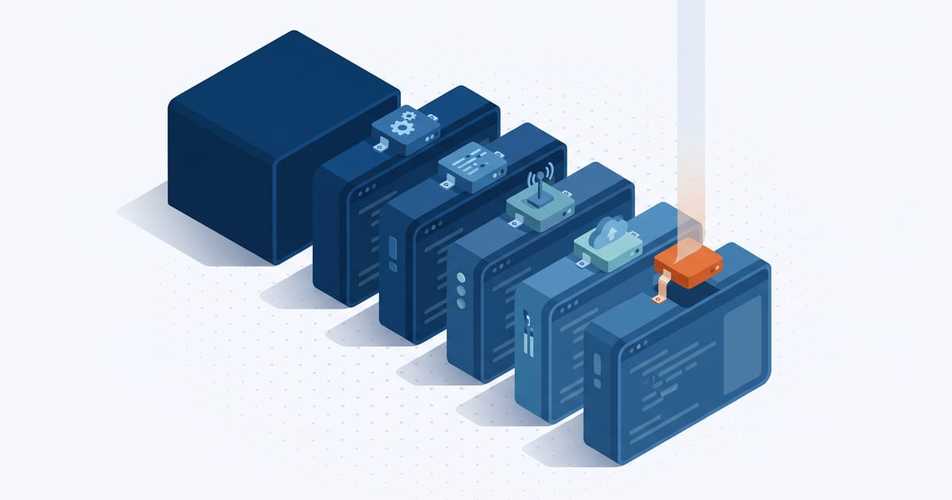
The problem is not that request. It is what it establishes: if your default becomes saying yes to specific requests, what you sell stops being a product and becomes one project per client under the same commercial name.
Article summary
- The cost of a customization is not building it. It is maintaining, testing and migrating it with every future product change.
- Configuration is variation the system already provides and serves everyone. Customization is behavior that exists for one client only.
- A three-question filter settles most requests before they turn into code.
- The rule that stands the test of time: a request becomes a configuration candidate when the second client asks for the same thing.
The cost of a customization is not building it
The price you calculate when you accept a specific request is the cost of writing it once. The real price is the sum of every time that behavior will need attention in the years that follow, and that sum never appears in the proposal.
Every line that exists for a single client takes part in everything that happens afterwards. It must keep working when you change the screen it lives on, when you rewrite the neighboring module, when you update the technology version, when a new client comes in with different data. None of these activities are about it, and all of them go through it.
What this means in money: a customization that is cheap to build can be expensive to maintain, and the difference shows up precisely when you most need speed, which is when launching the next version of the product to the whole base.
Configuration and customization are not the same thing
Configuration and customization look like the same request from the client's side, and they are opposites from the builder's side. The difference lies in who can change it later.
Configuration is a variation the system already provides and that someone turns on without programming: which fields are mandatory, how many approval steps there are, who sees which screen, the order of the phases. It costs more to build the first time, because you had to anticipate the variation, and after that it serves every client at no additional cost.
Customization is new behavior written for one client. It costs less now and starts billing you every month.
| Criterion | Customization | Configuration |
|---|---|---|
| Who can change it | Only whoever programs | Whoever operates the system |
| How many clients use it | One | As many as want to |
| Cost at the next update | Comes back | Zero |
| Effect on support | Requires knowing which version the client has | Same system for everyone |
| Time to deliver | Short now | Longer now, immediate afterwards |
The delivery time row is the one that explains why so many companies choose wrong. Customization delivers faster on the day of the promise, and that is exactly when the decision is made.
What happens when you reach the tenth version of the same system
After a few customizations, you stop having one system with variations and start having several similar systems. The change is gradual and the moment it happens is rarely noticed.
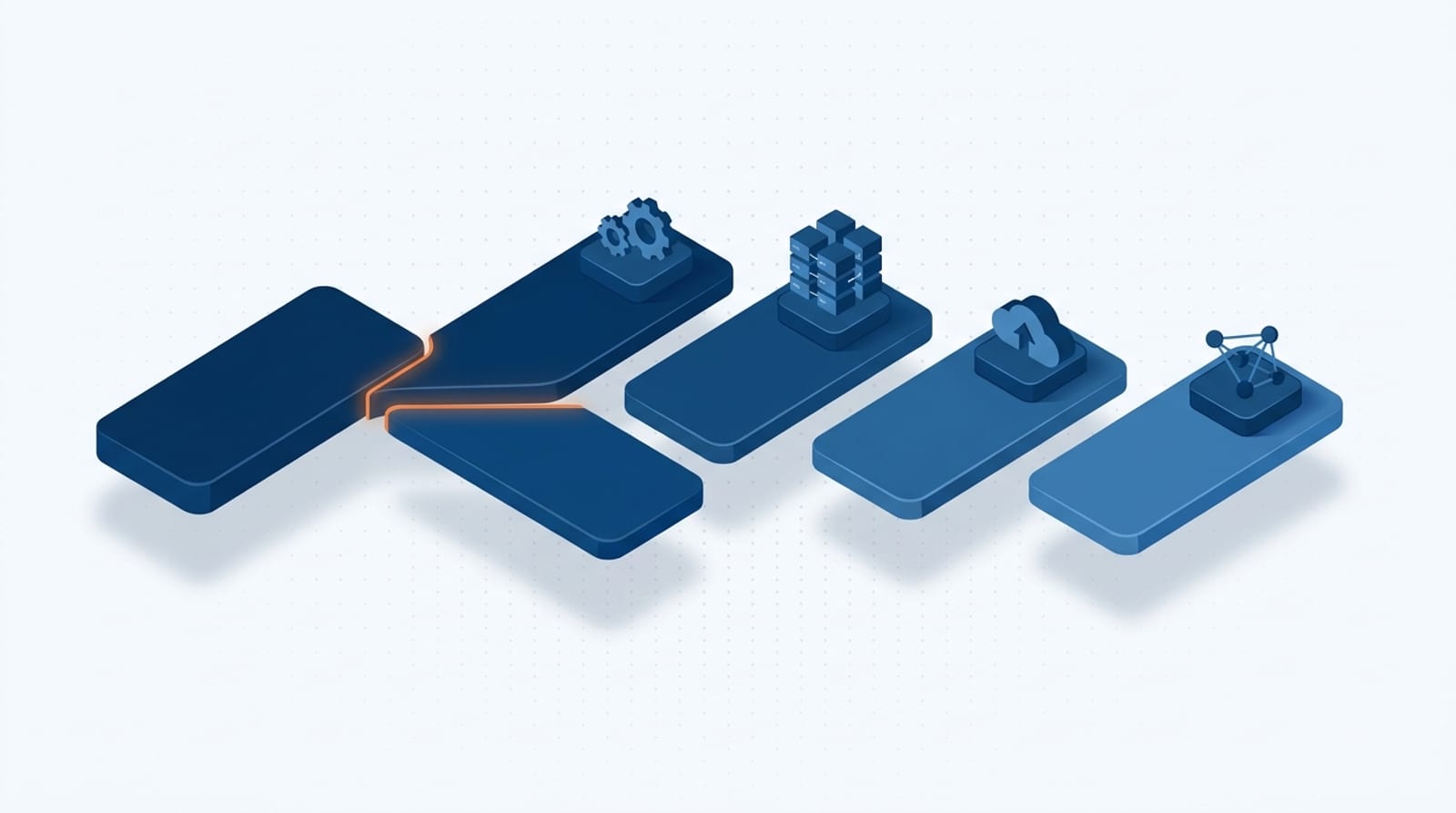
The first symptom is fix time. A problem found by one client stops being fixed for everyone: someone has to find out which clients have that piece of code, test each variation and publish more than once.
The second is fear of touching things. When nobody knows for sure what a change will affect, the team starts avoiding structural changes, and the product stops evolving exactly when it should speed up.
The commercial effect is the one that hurts most: the cost of operating the base starts growing along with the number of clients. Selling more stops diluting the cost and starts multiplying it, which is the opposite of what makes a software product worthwhile. The cost logic behind this is in MVP budget: how much to spend on v1 and how much to keep.
The three-question filter before accepting a request
Three questions settle most requests before they turn into code, and they take less than one meeting. The order matters: the first separates product from exception, the second separates need from format, the third decides the price.
- Has another client asked for this already? If so, it is a configuration candidate. If not, it is one company's opinion.
- Is the request the problem or the solution? Clients usually ask for the solution they imagined. Asking what they want to solve changes the request in a good share of cases.
- Would they pay for it separately? If the answer is no, the request is a preference. If it is yes, you have a service with a price, not a courtesy.
The second question is the one that saves the most work. A request for a "new column in the report" is often, in fact, "I need to know how much I lost this month", and that often already exists elsewhere in the system or can be solved with an adjustment that serves everyone.
How to turn a specific request into configuration
When the request is legitimate but specific, the path is to look for the generic variation hidden inside it. Almost every specific request is a particular case of a rule the whole industry has, and finding that rule turns a permanent cost into a sellable feature.
What this unlocks: you deliver on the promised date, the client who asked is served, and the feature becomes a sales argument for the next ones, instead of a hidden weight in maintenance.
A word of caution is in order, because over-generalizing has its own cost. Turning everything into configuration produces a system that requires a specialist to install, and the client cannot get started alone. The practical yardstick is to generalize what varies between clients and keep fixed what the industry does the same way.
The request worth accepting anyway
There are specific requests worth accepting, and treating them as a declared exception is different from accepting them by reflex. The difference lies in deciding with the price on the table.
The cases that usually justify it are few: a contract big enough to pay for maintaining that piece for years, a regulatory requirement the client must meet, or an integration with a system only they use that can be isolated from the rest. In all three, the request is accepted knowing what it costs.
What does not justify it is the promise made to close this month's sale. The bill comes later, with interest, and it goes to the team that will maintain the product, not to whoever made the promise.
What changes in your support when each client has a version
Support is where the bill arrives first, even before the development team notices. Every ticket starts with a question that shouldn't exist: which version does this client have?
In a single product, the support agent reproduces the problem on the same system the client uses. With per-client variations, they need to find out what is different there before investigating anything, and the fix they find may not work for the next similar ticket.
- Does every client run the same version of the system, with differences only in configuration?
- Does a fix published today reach the whole base without manual work?
- Can support reproduce a problem without asking the programmer for help?
- Is there a place where what each client has that is different is recorded?
If the answer to the last question is no, the cost already exists and has not yet been measured. The routine that keeps it from becoming permanent debt is in Post-launch: a routine for fixes and who decides the next version.
How to say no without losing the client
Most client frustration doesn't come from the no; it comes from silence. A request that disappears without an answer communicates that it doesn't matter; a request declined with a timeline and an alternative communicates that there is a method.
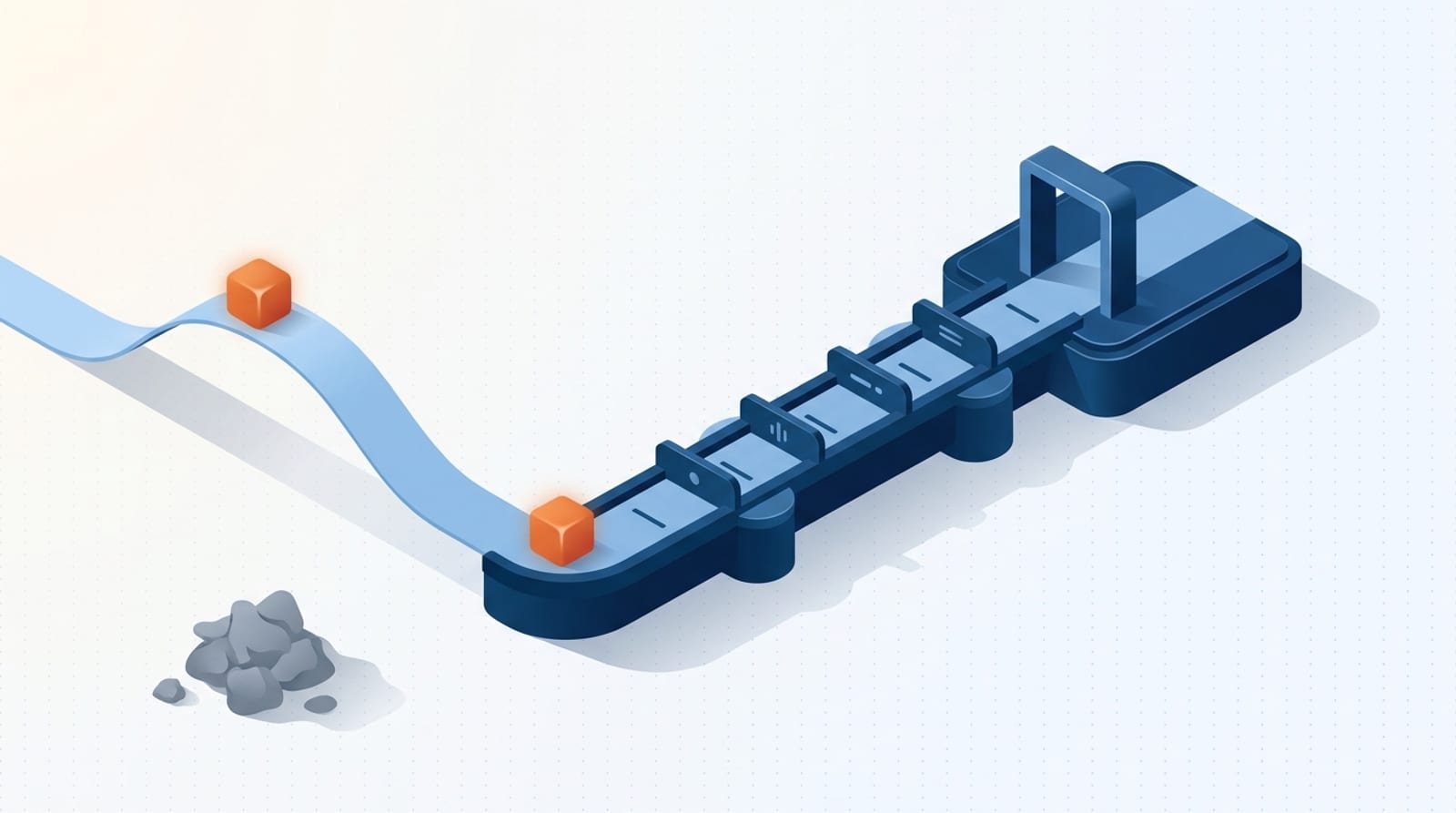
The answer that works has three parts, and none of them is the word no on its own: how to solve it today with what already exists, what would get that request onto the roadmap, and where they can follow it.
The second part is the one that keeps the relationship, because it turns a refusal into a clear condition. The client stops hearing that it won't happen and starts knowing what would need to happen.
It is worth saying frankly that this conversation is easier when the client understands that the product's stability also benefits them. The client who gets an exclusive version also gets a system that evolves more slowly, is fixed later and depends on more people to work.
Frequently asked questions
Configuring is using a variation the system already provides, turned on by whoever operates it. Customizing is writing new behavior that exists for only one client. The first costs once; the second costs at every future update.
Because the visible price is building it. The invisible price is maintaining, testing and migrating it with every product change for years to come, and that cost doesn't appear in the proposal.
When the second client asks for the same thing. An isolated request is one company's opinion; the same request coming from two different companies is a sign that the variation belongs to the industry.
Yes, when it is the condition for a relevant contract and is treated as a separate service, with its own price, a defined timeline and a conscious decision that it does not go into the main product.
By replacing the refusal with a timeline and an alternative: show how to solve it today with what exists, say what would get the request onto the roadmap and record the request visibly. Most frustration comes from silence, not from the no.
Every ticket starts requiring you to find out which version that client uses before investigating the problem. Handling time grows, a fix no longer serves everyone and cost starts to scale per client instead of per product.
Sources and method
This article describes patterns observed by X-Apps in software product projects with multiple clients, and a negotiation conducted in August 2026 with a restaurant operator who plans to sell a platform to other restaurants. The material was anonymized: no client is identified.
The effects described here are qualitative and come from project delivery, not from a statistical survey. We do not present market percentages on how often customization happens because we have no data of our own to measure them.