Índice do artigofaltam 12 min de leitura
A comment asking about the price is a lead. It does not go into the CRM, does not become anyone's task and, by Monday morning, it has already scrolled off the screen.
This article is not about using AI to write captions. That is already routine in almost every marketing team, and it changed nothing structural: someone still copies the text, opens the app and pastes it. The topic here is the next step, which almost nobody has taken.
Your company integrated the ERP with e-commerce. It integrated the CRM with email. It integrated finance with the bank. And it left out the only channel where the customer speaks first and in public. The social media operation is still one person, in a dashboard, with sixteen tabs open.
What changed is that it no longer has to be. Publishing, scheduling, replying to messages, launching ads and reading metrics became API calls, with events coming back when something happens. That takes social media out of the "marketing tool" category and puts it on the same shelf as the ERP and the CRM: a system that talks to the others.
Article summary
- What gets lost today is not posts, it is the return: the comment that was a lead, the metric that does not reach the report and the product that entered the catalog and was never published.
- API coverage is uneven on purpose. Publishing is planned for 16 networks (15 while Reddit remains suspended); comments reach 9 and direct messages 9 (8 with Reddit suspended), plus iMessage and SMS, because the limit is set by each platform. Count as of November 11, 2026.
- The entry price is no longer a barrier: two free accounts are enough for a real pilot before any contract.
- An AI agent operating the networks is the last step, not the first. Without integration and recorded approval, autonomy is brand risk with nothing in return.
What is left out when social media is a dashboard
The damage of keeping social media outside the system does not show up in posts, it shows up in the return. Nobody complains that the post went out; people complain that the lead disappeared, that the report was late and that the product sat on the website for two weeks without appearing anywhere.
There are three leaks, and all of them have the same cause. What happens on social media stays on social media.
Today
Isolated channel, operated by hand- A comment with purchase intent dies in the feed
- A new catalog product depends on someone remembering to post it
- The monthly number is copied from dashboard to dashboard into a spreadsheet
- An agency or an intern has the account password
Integrated
A channel like any other system- The comment becomes a CRM record with source and account
- A catalog entry triggers the publication
- Metrics arrive through the same path as the other indicators
- Access is a revocable grant, not a shared password
The fourth line is the least discussed and the one that hurts most when it goes wrong. As long as account access is a password, it leaves the company along with the person.
Publishing, replying, advertising and measuring became API calls
The offering that exists today covers four surfaces with the same authentication: publishing, inbox, ads and analytics. That is different from a few years ago, when each network had its own API, its own developer approval process and its own format.
To put numbers on this, we read the documentation of Zernio, a Spanish company founded in 2025, independent and with no ownership ties to X-Apps, which we had already evaluated in August in the context of WhatsApp. It serves here as a concrete case of how far the category has come, not as a purchase recommendation.
- Comments and messagesA public question becomes a private conversation and a CRM record.
- CatalogA product that enters the ERP is published with no human step.
- ReportingMetrics per post and per account go into the company dashboard.
- Paid mediaNine ad networks with one consolidated number.
- Network of locationsCentral publishing with variations per store or franchise.
- Regulated industryAn approval queue and a record of who released what.
- Client portfolioEach client is an isolated space, with its own access.
- Perishable inventoryA property or vehicle ad comes down when it sells.
Coverage is not uniform, and that is the most useful finding of the research. Publishing and scheduling is the only capability planned across all 16 networks, and even it has an exception today: Reddit blocked third-party apps on its API, and Zernio suspended publishing, messaging and metrics on that network until access returns. The deeper capabilities cover far fewer, because each platform decides, not whoever resells the access.
| Capability | Coverage | Where it does not exist |
|---|---|---|
| Publish and schedule | 16 of 16 planned, 15 today | Reddit, suspended while it blocks third-party apps |
| Read metrics | 10 complete, 2 limited | Telegram, WhatsApp, Discord, Slack |
| Read and reply to comments | 9 of 16 (8 with Reddit suspended) | Pinterest, Google Business, Snapchat, WhatsApp, Telegram, Discord, Slack |
| Direct messages | 9 of 16 (8 with Reddit suspended), plus iMessage and SMS | YouTube, LinkedIn, Pinterest, Threads, Google Business, Snapchat, Discord (send only, no replies back) |
| Ads | 9 ad networks | Its own set, not a subset of the 16 |
Capability matrix published at docs.zernio.com/platforms and docs.zernio.com/platforms/compare, read on September 1, 2026 and redone on November 11, 2026. The two limited metrics are Reddit's and Bluesky's; Reddit's is suspended for as long as the block lasts.
The practical reading of this table is one sentence: plan the flow by the shallowest capability it needs, not by the list of supported networks. A project that depends on replying to comments starts with almost half of the networks out.
The comment asking about price is a lead nobody records
This is the most expensive leak and the easiest to close, which is why we recommend starting here. A public question about price, delivery time or availability is declared purchase intent, and today it dies in the feed because whoever replies is not whoever sells.
The closed path has four steps, all available via API in the offering we researched: the comment event arrives signed, a rule decides whether it is purchase intent, the private reply goes out with the right material and the record is created in the CRM with the account and the source.
Private replies to comments exist on Instagram and Facebook. On TikTok, Threads, LinkedIn and YouTube, which have no private reply to comments, the automation in the offering we researched can only reply in public, and step three of the flow changes in nature.
There is another honest limit in this flow, and it also comes from the platform. On Instagram, Meta only says whether a user follows the account when that user has already sent a message before: commenting does not grant consent. When the answer cannot be resolved, the query comes back with an explicit reason, such as missing consent or direct message access turned off. That means segmenting comment automation by "only people who already follow" works for part of the audience and not all of it, and the design needs to treat "I don't know" as a normal state.
Publishing is easy; unpublishing at the right time is what makes money
Automating publication from the catalog is the application that pays off most in retail, real estate and car dealerships, and the reason is not the publication. It is the removal.
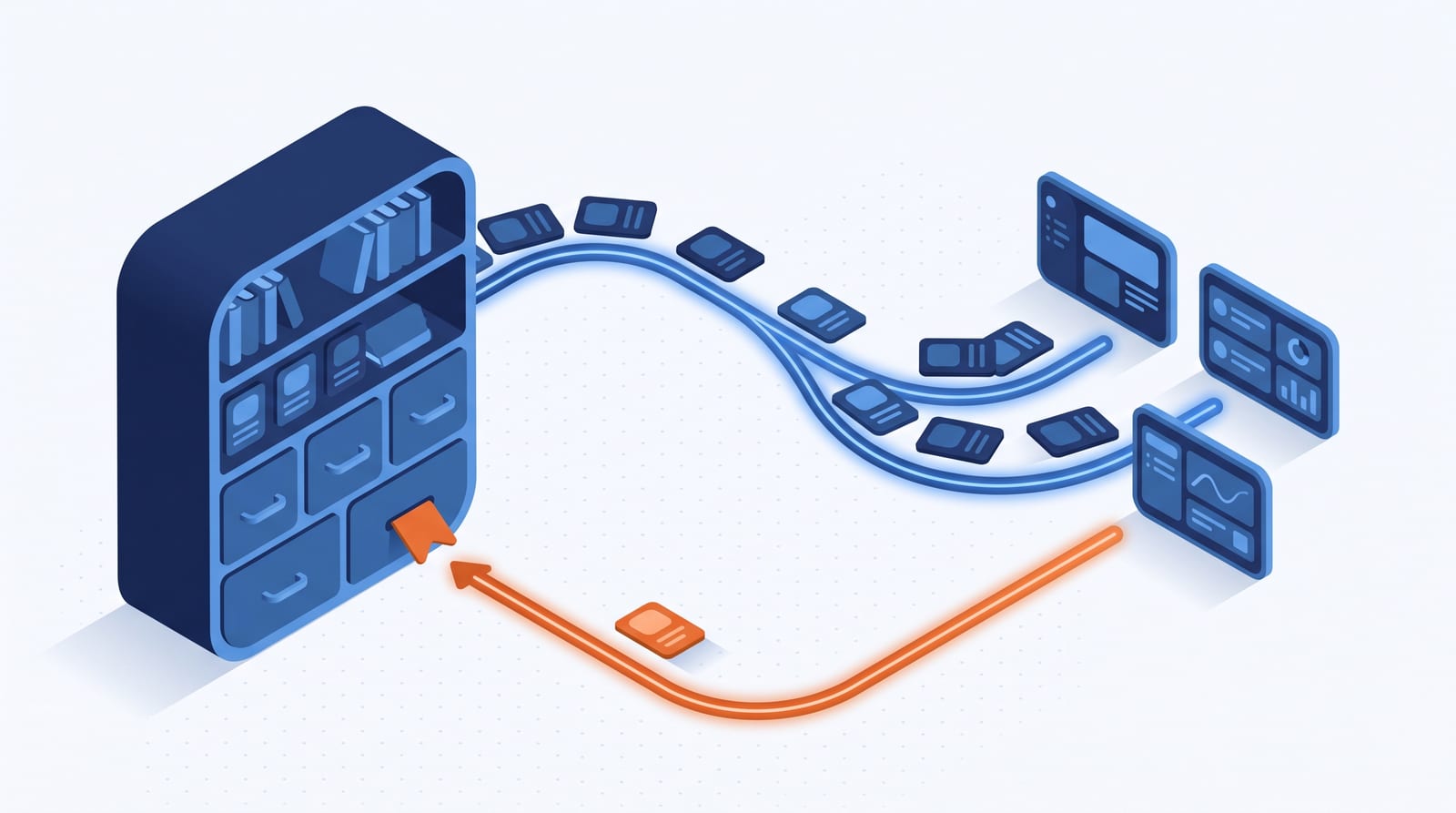
A sold property that stays advertised generates contacts the brokerage cannot serve, damages the agent's credibility and mismeasures the campaign's performance. A sold-out product in the feed has the same effect on e-commerce, with the added problem that the customer clicks, lands on the page and leaves.
When the catalog is the source of truth, entry and exit are the same mechanism, triggered by the same event. Nobody needs to remember anything.
A design precaution is worth noting here. Publishing via API has an idempotency key, which prevents a repeated call from becoming a second identical post, and a duplicate content check on the same account. In the documentation read on November 11, 2026, both last 24 hours (in the September reading the window was a few minutes). That solves network failures and same-day resends, not the routine that runs again two days later or the post with a slightly different caption. What prevents the product from being published twice in a month is your record, not the vendor's.
The monthly report is the work integration gives back first
If you need an argument finance understands in the first minute, it is this: someone in your company spends a fixed chunk of every month copying numbers from dashboards into a spreadsheet, and that work produces no new information.
Reading via API solves this, with four freshness caveats that need to go into the dashboard design so nobody thinks the data is broken.
Cache and sync limits at docs.zernio.com, read on September 1, 2026 and checked again on November 11, 2026.
The last number is the most relevant and the least obvious: a post published directly in the app, outside the API, is recognized later, through periodic sync. If your dashboard promises "real time" and the team keeps posting from their phones, the dashboard will look wrong without being wrong.
Nine ad networks, one consolidated number
Paid media is where dashboard sprawl costs the most per hour of expensive people. A media buyer opens Meta, Google, Microsoft, TikTok, LinkedIn, Pinterest and X to build a number leadership asks for every Monday.
As of the November 11, 2026 reading, the offering we researched covers nine ad networks through the same authentication: Meta Ads, Google Ads, LinkedIn Ads, TikTok Ads, Pinterest Ads, X Ads, ChatGPT ads, Reddit Ads and Microsoft Ads. In September there were seven; Reddit Ads and Microsoft Ads came in later, and Reddit Ads keeps working even with Reddit's organic side suspended. ChatGPT ads are new enough to be a curiosity rather than a plan, but they show the direction: a new ad network is born with an API before it is born with a mature dashboard.
The concrete gain is not creating campaigns via API, which still requires human judgment. It is reading: spend, delivery and results from the nine networks arriving in the same dashboard, without anyone assembling them. And it is acting on what the reading shows, such as pausing an ad set that blew past its cost per lead before anyone opens the dashboard on Monday.
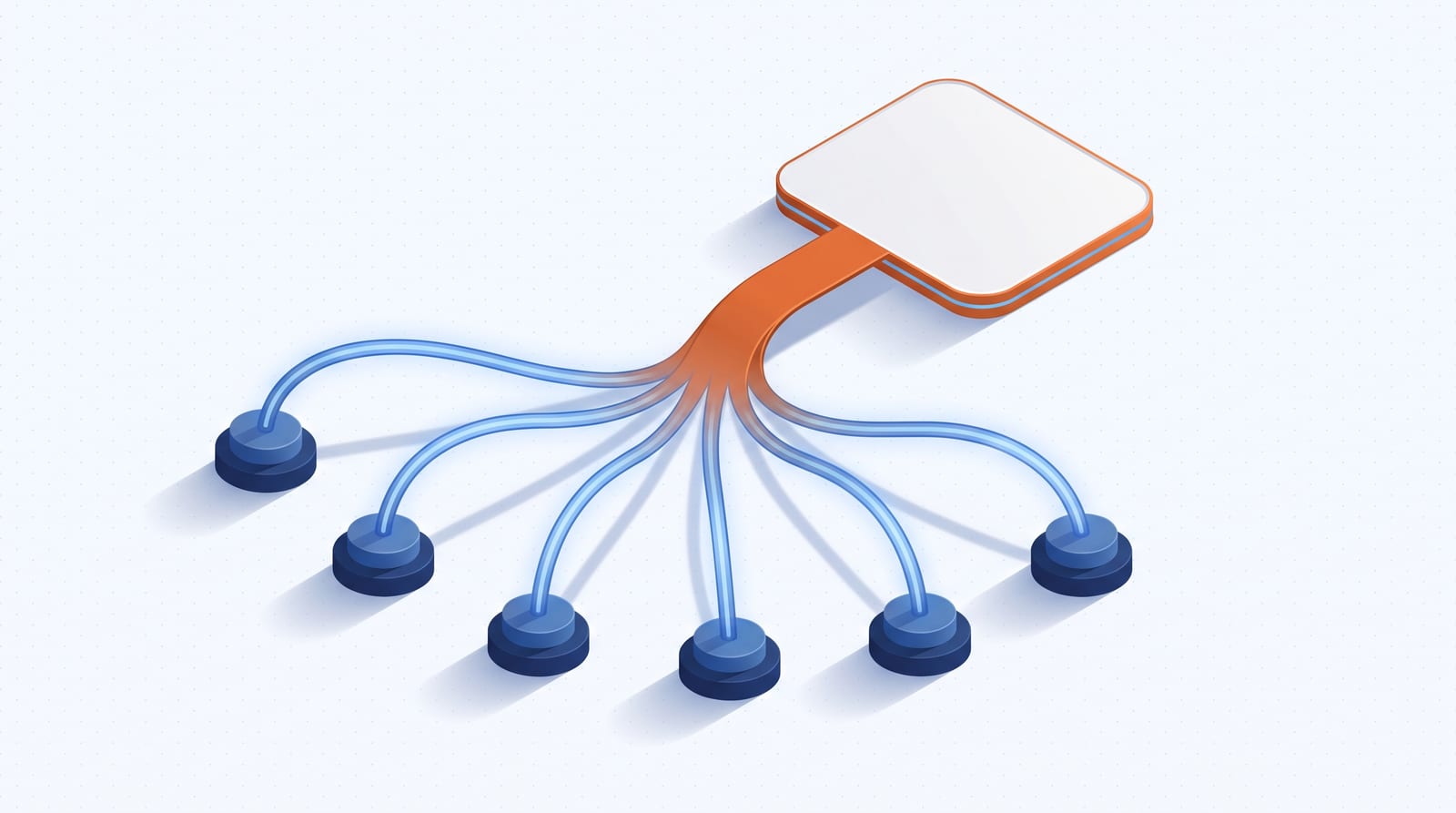
Consolidation does not eliminate specialization. Each network keeps its own auction logic, its own objective vocabulary and its own way of counting conversions, and nobody should pretend nine numbers become one without stated assumptions.
What reading via API solves is the manual work of gathering, which is where the media buyer's Monday goes.
Where the platform blocks you, and why the limit is not the vendor's
Every automated publishing project runs into the same ceilings, and it is better to know them before promising volume to internal stakeholders. They come from the networks, not from the intermediary.
| Limit | Value found |
|---|---|
| Publishing speed | 25 posts per hour, per account |
| Daily ceiling, Instagram and Facebook | 100 posts |
| Daily ceiling, Threads | 250 posts |
| Daily ceiling, X | 50 posts |
| Daily ceiling, Pinterest | 25 posts |
| Daily ceiling, TikTok (connection via the TikTok for Business app, the default for every new connection) | 15 videos and 15 photos, in a rolling 24-hour window |
| Daily ceiling, other networks | 50 posts |
Limits published at docs.zernio.com/rate-limits, read on September 1, 2026 and checked again on November 11, 2026, when TikTok's own ceiling was already listed.
The hourly ceiling is the same for every network; what changes from one to another is the daily ceiling, and that is what defines the real timeline of an initial catalog load.
The per-network detail, with what each platform accepts in terms of format, media and post-publication editing, is in API for publishing on social media: what you can do and where the platform blocks you.
What it costs, and what is not in the per-account price
The entry price is no longer a barrier, and that is the most relevant commercial change for anyone who wants to test before deciding. In the offering we researched, the first two connected accounts are free and need no card, with full API access. That is enough for a real pilot of a whole flow.
The ladder above that is graduated, tier by tier: US$ 6 per account from 3 to 10, US$ 3 per account from 11 to 100, and US$ 1 per account from the 101st on, with no ceiling. By the ladder itself, 20 accounts come to US$ 78 a month (8 at US$ 6 and 10 at US$ 3), because the first two do not count. In the table read on November 11, 2026, the ad account goes into the same ladder: a Facebook page, the Instagram linked to it and the Meta ad account behind them are three connected accounts.
What usually surprises people is what stays out of that calculation.
The X pass-through is the easiest to underestimate because it is per call, not per account: in the material we read, reading a post costs US$ 0.005 per resource, creating content US$ 0.015 per request and content with a URL US$ 0.200 per request, passed through with no markup. There is a configurable monthly cap, with an alert at 80% and a pause at 100%, and it is worth setting it on day one. Managed ads are free up to 500 active ads and cost US$ 0.01 per active ad per month after that. The same pricing page shows meters that the September reading did not record, such as messages sent through the inbox (10,000 per month included, then US$ 1 per 10,000) and automation runs (on the monthly bill of new accounts, 2,000 per month included, then US$ 2 per thousand), and they are worth checking before designing a high-volume reply flow.
The full math for those operating many accounts, including what human hours cost in each model, is in How much it costs to operate 40 client social media accounts.
The agent comes after the integration, never before
The offering we researched exposes a hosted MCP server that keeps about 50 tools visible and leaves the rest of the catalog to be discovered on demand, which lets you plug an assistant directly into the social media operation. It is the flashiest part and the one that most deserves caution.
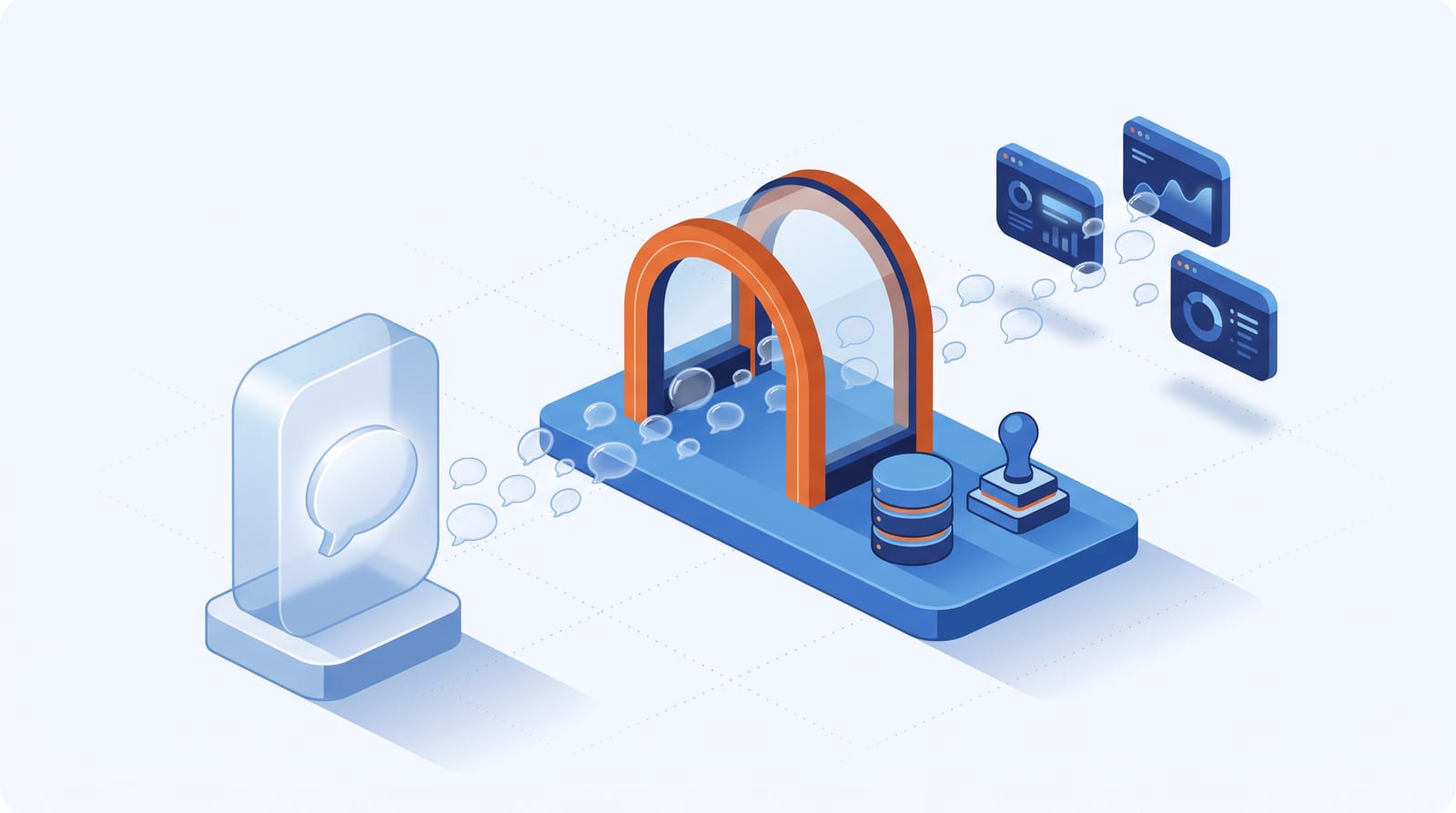
The reason for the order is simple and not technical: public posting is irreversible. A wrong order in the ERP can be reversed; a wrong post on the company profile has already been seen, captured and commented on before anyone deletes it. Autonomy without recorded approval trades hours of work for brand risk, and that trade rarely pays off in the first months.
What to do with this surface, which operations to allow and how to record who authorized what is in Can an AI agent post on behalf of your company?.
Where to start
The classic mistake is opening sixteen connections and closing no flow. One whole working flow proves value and funds the next; sixteen open connections prove that integration is possible, which nobody doubted.
- Choose the flow that is really being lost today, almost always the comment with purchase intent
- Connect two accounts on the free tier and close that flow into the CRM, without touching the other networks
- Check the capability before the scope: if the flow needs comments, almost half of the networks are out
- Keep on your side what came in and what went out, with an event identifier, before automating any reply
- Set the spending cap for the X pass-through on day one, not on the first scare
- Only after the flow has run on its own for a few weeks, discuss what an agent can execute
The order matters more than the choice of vendor. Switching vendors with your own layer in place is adapter work; switching without it is starting over.
Sources and method
This article combines two pieces of research. The first is our own desk research, from August 20 and 22, 2026, when we evaluated Zernio against 12 criteria defined before the research, in the context of WhatsApp coexistence (the WhatsApp Business app and the API running on the same number). The second is a reading of Zernio's public documentation on September 1, 2026, covering platforms, pricing, usage limits, webhooks and the MCP server.
Zernio appears as a concrete case because it documents on open pages, without a sales contact, the points that matter for this text. It is not a purchase recommendation: the category has other vendors, and no comparison between them was carried out for this article.
On November 11, 2026 we redid the reading of platforms, capability comparison, usage limits, pricing, idempotency, metrics and the MCP server. What changed: the count for comments and direct messages, the Reddit suspension, TikTok's own ceiling, the number of ad networks (from seven to nine) and the idempotency window; we also started recording the ad account counted as a connected account and the meters for sent messages and automation, which the first reading did not cover; the ceilings for the other networks, the per-account price ladder, the X pass-through and the metric freshness timings matched the first reading.
No number in this text comes from a pilot run by X-Apps with this vendor. The capabilities described are what the documentation states, and stated capability only becomes proven capability in a pilot with event counts at both ends.
Primary sources consulted on September 1, 2026 and reviewed on November 11, 2026: zernio.com, docs.zernio.com (platforms, pricing, usage limits, webhooks, MCP and glossary) and the platform's public changelog.
Frequently asked questions
It means that publishing, replying to messages, launching ads and reading metrics stop being clicks in a dashboard and become calls your own system makes. The ERP publishes the new product, the comment becomes a lead in the CRM and the report comes out ready.
No. Writing captions with AI is already routine and changes nothing structural, because someone still copies the text and pastes it into the app. The topic here is who executes the publication and what happens to the response afterwards.
In the offering we researched, publishing and scheduling are planned for 16 networks, of which 15 work today, because Reddit blocked third-party apps and is suspended. The deeper capabilities cover fewer: comments reach 9 of them (8 with Reddit suspended) and direct messages 9 (8 with Reddit suspended), plus iMessage and SMS. The uneven coverage is a platform rule, not the vendor's. Read on November 11, 2026.
Not necessarily. The gain is not in replacing the scheduling dashboard, it is in connecting the social media operation to the systems that already exist, mainly CRM and product catalog.
With the vendor we researched, the first two connected accounts are free and need no card, which allows a real pilot before any contract. Above that the price is per connected account, in tiers that drop with volume.
Technically yes, and it is the last thing to do, not the first. Public posting is irreversible, so the approval and logging design needs to exist before autonomy.
Choose a flow that is currently being lost, almost always the comment asking about price, and close only that one end to end into the CRM. One whole working flow is worth more than sixteen open connections.