Índice do artigofaltam 8 min de leitura
Minutes with an omission are still a coherent, well-written and convincing document. They are missing a line nobody knows should be there.
Using artificial intelligence to turn a meeting transcript into minutes, tasks and CRM data works well today. The problem shows up later, when someone asks whether it can be trusted. The standard answer is "we read a few and they were great", and that answer means nothing, for a reason worth understanding before scaling the process.
Article summary
- Reading the minutes does not detect omission. The document remains coherent with a line missing, and the missing line is precisely what costs money.
- The useful evaluation is recall broken down by category against a human answer key, never an overall score.
- An invented commitment is the only error that deserves zero tolerance: omission causes delay, invention makes an agent act wrongly.
- There is no public benchmark of omission rate by reasoning level. Whoever needs that number has to measure it in their own operation.
Reading the minutes does not detect the error that matters
The most costly error in automatic minutes is invisible when reading. If the AI recorded nine of the ten decisions in the meeting, the resulting document is coherent, well written and shows no sign that something is missing. You only find out weeks later, when the tenth decision turns into a delay, a complaint or an argument about what had been agreed.
This sets this kind of evaluation apart from almost everything a team is used to reviewing. In code, the failure shows up: the test breaks. In a financial report, the sum does not add up. In minutes, absence leaves no trace. That is why the acceptance criterion cannot be the reading by whoever receives them: it has to be comparison against a reference built by someone who was in the meeting or read the entire transcript.

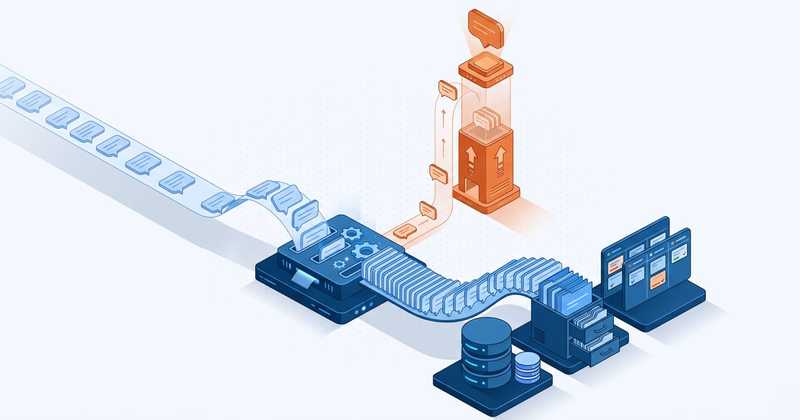
The two documents in the illustration have the same appearance, the same length and the same quality of writing. One of them lost an item. No sample-based review reliably tells the two apart, because the reviewer does not have the list of what should be there.
It is this asymmetry that makes measurement cheap compared with the cost of the error: the answer key is built once and serves forever.
The two failure modes, and why the second is worse
There are two structural defects in this kind of output, and they call for different treatments.
The first is omission: an item that existed in the conversation does not appear in the minutes. The technical dependency mentioned in passing, the requirement said only once without emphasis, the agreement that came up in the middle of another topic. Omission removes information from the system, and the effect is delay.
The second is misclassification: an item appears, but in the wrong category. Someone said "we could migrate in October" and that became a decision with a deadline, when it was a hypothesis raised and not settled. Or a client objection became an approved requirement. This is the worse of the two, and the reason is what comes after the minutes: when an agent takes actions in the CRM, email and repository based on this data, wrong information produces wrong actions, with external recipients.
Ten metrics that replace "it looked good"
The useful evaluation is recall by category against an answer key, with each category counted separately. An overall score is the metric that most delays discovering the problem, because it hides the failing category behind the ones that are doing well.
- Decision recallOf the decisions the meeting settled, how many appear in the minutes.
- Task recallEach agreed action becomes an item, or disappears inside a paragraph.
- Owner recallA task without an owner does not happen. Count it separately from task recall.
- Deadline recallIncludes relative dates resolved wrongly, the most common error here.
- Requirement recallA technical or commercial requirement said only once, without emphasis.
- Relevant omissionLost items weighted by the weight the answer key gave each one.
- Invented commitmentAn item with no traceable origin in the transcript. Zero tolerance.
- Decision versus hypothesis"We will do it" and "we could do it" in different categories.
- Disagreement preservedWhen two participants disagreed, both sides appear.
- Fidelity to the originalNumbers, names and amounts cited match what was said.
Two rules make this set work in practice. The first is to count category by category, because they do not drop together: high decision recall coexists with low deadline recall, and the average hides that. The second is to weight by relevance, marking in the answer key what is critical, because losing an agenda item and losing a scope clause are not the same error and should not weigh the same.
How to build the answer key without stopping the operation
The answer key is a list, per meeting, of what should be in the minutes, with each item marked as critical or not. It is the only expensive asset in this process, and it is expensive only once.
Twenty to thirty real meetings are already enough to support configuration decisions. Choose them to cover the variety the operation really has: short alignment meetings, sales meetings, technical meetings, and at least one long, difficult meeting, with lots of people talking over each other and implicit decisions. That last one is what separates configurations, because in easy meetings every configuration gets it right and the comparison shows nothing.
- Select and freeze the set, because comparing configurations on different meetings is comparing lottery draws.
- Ask someone who attended to list what the minutes would need to contain, without looking at any AI output.
- Mark each item as critical or ordinary, and it is that marking that turns a count into risk.
- Keep the source excerpt for each item, which is what makes it possible to judge invention later.
- Set the thresholds per category before running, so the result does not become a negotiation after the number appears.
The step most often skipped is the fourth. Without the source excerpt recorded, telling an invented commitment apart from an item that was in the conversation and the evaluator did not remember turns into an argument, and the most important metric in the set loses reliability.
What public benchmarks measure, and what nobody has measured
To be direct: there is no public benchmark that measures omission rate in meeting minutes by reasoning level. Anyone presenting that number took it from an evaluation of a different nature.
What exists is adjacent and useful, as long as each one is read with its limits.
| Evaluation | What it says, and where it stops |
|---|---|
| MedScribe | Generates a clinical note from a consultation transcript, with 100 expert rubrics over 80 transcripts. It is the closest structural analog. It shows models do this task well, but does not publish an omission rate. As read on November 11, 2026, the leaderboard shows some models with and without reasoning and a single entry with a fixed level (GPT 5.4 xhigh), with no ladder of effort levels for the same model |
| Artificial Analysis long context | One hundred questions on documents of 10,000 to 100,000 tokens, requiring synthesis of scattered information instead of finding a needle in a haystack. It measures reasoning over long text, not extraction completeness |
| Legal Research and MortgageTax | Reading of legal and tax documents measured by Vals AI. Confirms competence on dense documents, also without an effort ladder |
| Programming benchmarks | They do not transfer. A failure in code shows up in the test that breaks; a failure in minutes is a line that does not exist |
Sources: Vals AI and Artificial Analysis, read on August 31, 2026, checked again on November 11, 2026.
The practical conclusion from this gap is comforting, not uncomfortable: since nobody has published the number, nobody has an information advantage over you. The twenty-meeting answer key your company builds in an afternoon produces, for your operation, a data point that does not exist publicly for anyone.
How to compare configurations using the answer key
With the answer key ready, comparing configurations becomes mechanical. Run the entire frozen set on each configuration, with everything identical except the variable you are testing, one configuration at a time through to the end before starting the next.
What you read at the end are two columns together, never apart: recall by category and cost per meeting. Apart, they produce the two classic wrong decisions, which are choosing the cheapest configuration without seeing what it lost, and choosing the most expensive one without seeing that it gained nothing.
Differences of one or two recall items, or of cents in cost, are within the noise of a single run. When two configurations come out close, repeat the run on both instead of deciding by the difference.
What level of error is acceptable
Thresholds are per category and are not equal, and defining them before seeing the numbers is what keeps them from becoming a justification for the result obtained.
The reference that usually makes sense for meeting operations: invented commitments with zero tolerance, because they leave the building; decision and owner recall on critical items treated as blocking, because that is what supports follow-up later; deadline and requirement recall with some margin, as long as the item appears somewhere in the minutes even if not in the right category. Misclassification between decision and hypothesis deserves its own threshold, because it is what feeds automatic action.
These are calibration principles, not measured numbers: your operation's values come out of the answer key, and depend on what happens downstream of the minutes. Minutes that only become a reference document tolerate more than minutes that trigger tasks and emails on their own.
What to do with what the measurement reveals
The answer key result usually points to two moves, and neither is switching models.
The first is to route by criticality instead of treating every meeting the same. If recall holds at the low level for operational alignment and drops in long sales meetings, the answer is not to raise the level for everything: it is to raise it where the measurement showed a drop. A meeting with contractual or architectural consequences pays for the difference on its own; a weekly status meeting does not.
The second is to audit the critical slice. A second pass that rereads the transcript looking for what was left out is the direct defense against the failure mode reading does not catch. It is worth stating the honest price: since the auditor needs to reread the entire transcript to detect absence, and cache is not shared between different models, by our calculation this audit costs about 10% more than simply processing everything once at the high level. In other words, auditing is not a cost-saving strategy, it is an independent second reading bought for about a tenth more. When omission is the main risk, that is cheap.
And there is a move that comes before both, which is instrumentation: logging the consumption each response reports, including the split between reasoning and text. Without that log, any later adjustment becomes guesswork, because you do not know which part of the process is growing.
Method and sources
Research from August 31, 2026, reviewed on November 11, 2026. The benchmark references come from Vals AI, for MedScribe, Legal Research Bench and MortgageTax, and from Artificial Analysis, for the long context evaluation. The behavior of the reasoning parameter and its effect on cache come from the Claude platform documentation, checked again on November 11, 2026, when the per-message level change already appeared in beta.
The set of ten metrics and the answer key procedure are our proposal, built from the two failure modes described at the beginning, and are not a market standard. The 10% figure for the audit is our own calculation, with the transcript size and pricing assumptions detailed in the article on effort levels.
X-Apps has not measured omission rate in its own lab, and there is no public measurement of it by reasoning level. Where this text talks about quality by configuration, it is describing how to measure, not reporting a result.
Frequently asked questions
Because the most costly error is omission, and minutes with an omission are still a coherent, well-written document. Nothing in the text gives away the line that was left out. Only comparison against an answer key reveals it.
Recall broken down by category (decisions, tasks, owners, deadlines, requirements), plus relevant omission rate, invented commitments, misclassification between decision and hypothesis, preservation of disagreement and fidelity to the original text.
Because they do not drop together. A system can have high recall on decisions and low recall on deadlines, and an overall score hides exactly the category that is failing. The average is the metric that most delays discovering the problem.
20 to 30 real meetings are already enough to support configuration decisions. Freeze the set and make every future comparison run exactly the same meetings, otherwise you are comparing configurations against a lottery.
The closest is MedScribe, from Vals AI, which generates a clinical note from a consultation transcript using 100 expert rubrics over 80 transcripts. It shows that models do this kind of task well, but it does not publish an omission rate and, as read in November 2026, it compares some models with and without reasoning and has a single entry with a fixed effort level (GPT 5.4 xhigh), but no ladder of levels for the same model.
The invented commitment, meaning an item in the minutes with no origin in the transcript. Omission causes delay; invention makes an agent act on something nobody agreed to, and that reaches the client.