Índice do artigofaltam 3 min de leitura
Anthropic and OpenAI launched models at the same price in September, but the bill changes with usage. In a system that sends very long documents at once (400,000 tokens per request, above OpenAI's 272,000 limit), a thousand requests cost, by our math, R$ 4,385 (Brazilian reais) at Anthropic and R$ 8,666 at OpenAI. For an assistant that repeats the same text, the two have been tied since Anthropic lowered the price of rereading stored text in October.
Updated on November 10, 2026: in the table reread on October 19, 2026, Anthropic started charging US$ 0.10 per million (5% of input) to reread stored text on Sonnet 5.5, against US$ 0.20 at launch. With that, OpenAI's advantage for the assistant disappeared, and the tables below already use the prices reread on November 10, 2026.
What to do: ask your technical team or vendor which model the system uses, how many documents or requests it sends per month (multiply by the values above) and whether any request is the size of an entire contract or lawsuit. Both vendors report in each response how much text went in and out, so one week of that log answers the question. If the system only exchanges short messages, the price is a tie and the choice comes down to quality and speed.
What is the same and what changes in the price table
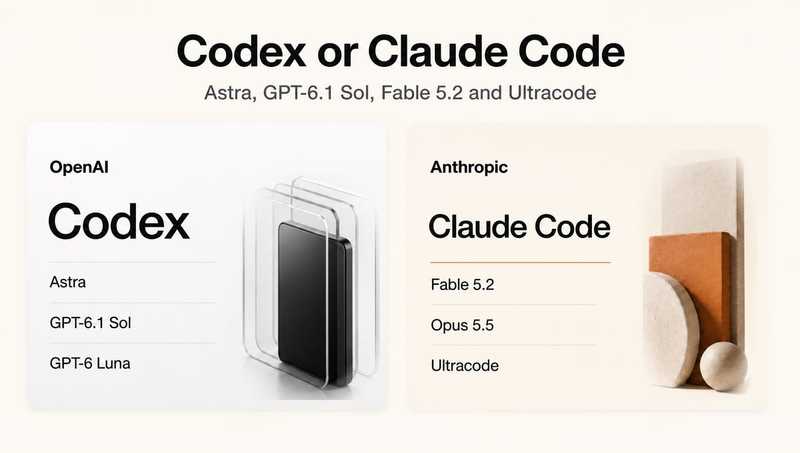
Anthropic launched Claude Sonnet 5.5 (its mid-tier model) on September 28; OpenAI launched GPT-6.1 Sol (its equivalent) the next day. Billing is per token (the chunk of text the AI charges for; each vendor splits text its own way), in dollars per million.
| Price item, per million tokens | Anthropic | OpenAI |
|---|---|---|
| Text sent | US$ 2 | US$ 2 |
| Text generated | US$ 10 | US$ 10 |
| Storing text for reuse | US$ 2.50 (5 min) or US$ 4 (1 h) | US$ 2.50 (30 min) or US$ 5 (12 h) |
| Rereading stored text | US$ 0.10 | US$ 0.10 |
| Request above 272,000 tokens | same price up to 1 million | input and cache 2x, output 1.5x, on the whole request |
Source: Anthropic and OpenAI pricing pages, read on September 30, 2026 and reread on November 10, 2026, direct contracting with the vendor.
The biggest difference is in the bold line, and it favors Anthropic. Storing text also has a different price and duration (5 min or 1 h at Anthropic, 30 min or 12 h at OpenAI): OpenAI's cache lasts longer for the same US$ 2.50, which helps when calls are spaced out, but that weighs little in the profiles below. At launch there was another difference: rereading stored text cost US$ 0.20 at Anthropic, twice OpenAI's price, until Anthropic matched it in October. To keep track when the table changes, the AI model comparison tool shows the two side by side, with the source and date of each price.
An assistant that reuses the same text: a tie since October
Cache (text already sent to the model that it rereads at a lower charge) costs 5% of the normal price at both vendors. At launch, Anthropic charged 10% on Sonnet 5.5, and that is what gave OpenAI the advantage this article pointed out in September. Cache matters for an assistant with a document base, customer service with a long history or an AI agent (software that performs tasks on its own): every call resends the same instructions and the same conversation, and almost all of it comes from cache. With the same read price, the assistant's math is equal on both sides, as long as each request stays below 272,000 tokens.
Very long documents: Anthropic's advantage
At OpenAI, when a request goes over 272,000 tokens, the whole request changes price, not just the excess. Anthropic charges the same rate across its entire 1 million window. Anyone who sends an entire contract, a lawsuit or all of a system's code at once crosses that line without noticing.
| Usage profile, per request | Anthropic, per thousand requests | OpenAI, per thousand requests |
|---|---|---|
| Assistant that reuses text: 200,000 tokens reread, 2,000 new, 1,000 generated | R$ 177.49 | R$ 177.49 |
| Long document: 400,000 new tokens, 4,000 generated | R$ 4,385.14 | R$ 8,665.86 |
| Short conversation: 3,000 input, 1,000 generated | US$ 16 | US$ 16 |
Our own calculation based on the prices reread on November 10, 2026, the same as on September 30, 2026, except for Anthropic's cache reread; the profiles are planning assumptions. Dollars converted at the PTAX rate (Brazil's central bank reference exchange rate) of September 29, 2026, without IOF (Brazil's tax on financial transactions).
For the assistant, the two tie. For the long document, OpenAI costs almost double. For the short conversation, the two columns are identical.
Switching vendors or versions also has a cost
Each vendor counts text its own way, and Anthropic warns that its models from Claude 4.7 onward generate about 30% more tokens for the same text than the previous ones. The table above assumes the same count on both sides, so the fair comparison is per task, with your real text. The savings promises in the announcements, such as Anthropic's "up to 30% less", are the company's own, with no published method.
Switching to the new version at the same vendor does not raise the list price, but it changes behavior: the new model answers the same request differently, and neither of the two has disclosed the cost of adapting and testing the system. OpenAI's model offers to keep data in the United States or Europe, and none of the documents we read offers processing in Brazil. Anyone handling personal data needs to assess international transfer under LGPD, Brazil's data protection law, before looking at the table.
What was the largest document your product sent to the AI last month?
Sources and method
Announcement of Claude Sonnet 5.5 (Anthropic, September 28, 2026) and GPT-6.1 Sol (OpenAI, September 29, 2026); both pricing pages, read on September 30, 2026 and reread on November 10, 2026; Central Bank of Brazil PTAX selling rate of September 29, 2026. Per-profile costs and conversion into reais are our own calculation. Prices as of November 2026; Anthropic's cache reread dropped from US$ 0.20 to US$ 0.10 per million between October 2 and October 19, 2026.