Índice do artigofaltam 7 min de leitura
The same exam, the same performance, four different numbers: 90th, 69th, 48th and 15th percentile. What changed was who the comparison was made against.
Every artificial intelligence vendor arrives at the meeting with a number. And the buyer's natural reaction is to ask for a competitor's number to compare, which almost always makes the decision worse, because two different yardsticks compare nothing.
It is worth ruling out the obvious fix right away: "so I'll ask for a proof of concept". Asking for a proof of concept that the vendor builds, with cases the vendor chooses, is exactly the same problem in more expensive packaging. The question is not whether there is a test, it is who controls the three things that decide its result.
This article uses the best-documented case there is, the US bar exam, and the evidence presented by Joel Niklaus at the University of St. Gallen's AI & Legal Reasoning Conference in August 2026, to turn this into questions that fit in a meeting.
Article summary
- The same performance became the 90th or the 48th percentile depending on the comparison group. Neither is false.
- On a leaderboard with 139 models, the top ten fit within 2.25 points. The overall ranking stopped separating what works from what does not.
- Swapping random sampling for a time split dropped a predictor's accuracy from 0.77 to 0.58, and 65% of the hits came from the judge's name alone.
- Three controls decide whether a number is worth anything: who obtained the product, who funded the test and who controls the protocol.
The same exam, four numbers
In March 2023, OpenAI reported that GPT-4 scored around the 90th percentile on the US bar exam. The number went around the world and became a sales argument for dozens of legal products.
In 2024, researcher Eric Martínez redid the math and published the result in the journal Artificial Intelligence and Law. The model's raw performance did not change. What he showed was that the original conversion was anchored on the February exams, which are dominated by people retaking the exam and tend to score below the overall pool.
Source: Eric Martínez, "Re-evaluating GPT-4's bar exam performance", Artificial Intelligence and Law 33(3), 2025.
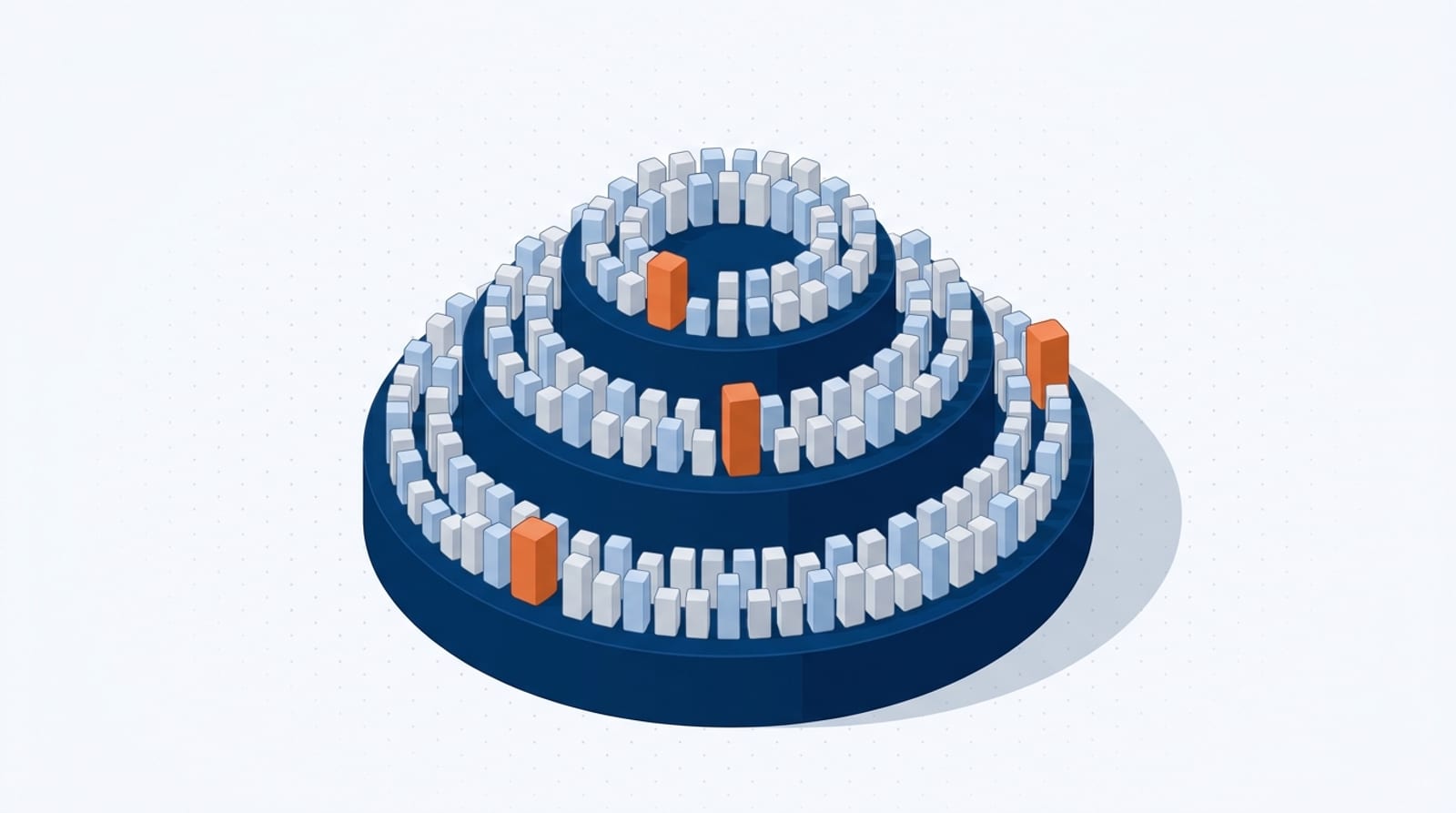
Note the last step, which is the most relevant for professional work. On the written portions, which are the ones that resemble what a lawyer delivers, against those who passed the exam, the result drops to the 15th percentile.
The distance between "almost better than everyone" and "worse than most of those who passed" was produced entirely by the choice of comparison group.
What this unlocks in a meeting: the useful question is not what the number was. It is against whom, and on which part of the exam. Almost no sales material answers both without being asked.
The overall ranking stopped separating the models
There is a second, newer problem, and it affects those who try to protect themselves by comparing public rankings. On a public legal performance leaderboard updated on August 19, 2026, with 139 models evaluated, the top ten fit within 2.25 points of the aggregate score, all clustered near the top.
This does not make the leaderboard useless, it makes the aggregate useless for deciding. Public readings of the same leaderboard show the best models doing very well at identifying the issue and reaching a conclusion, and visibly worse at rhetorical analysis. A buyer whose task is of the second type makes the wrong decision by looking at the number for the first.
The practical translation: if every vendor shows a similar number, the number has stopped being the criterion. The criterion goes back to being what it does on your task, with your documents.
An easy benchmark hides the problem, a hard one shows it
The contrast that closes the previous argument appeared when someone built a deliberately hard yardstick. A benchmark published in 2026 used more than 1,250 tasks drawn from real client cases, in 24 practice areas, with more than 75,000 criteria written by specialists, and adopted a relentless cutoff: missing one mandatory criterion zeroes the task.
Left, public leaderboard of 139 models in August 2026. Right, legal agents benchmark, a test run by the vendor in May 2026.
The two numbers describe models of the same generation. The whole difference lies in what each yardstick demands: answering an isolated question well, or delivering complete work without failing any requirement.
And here comes a discipline almost nobody applies: a benchmark number has an expiry date. The 7.1% is from May 2026 and has already been surpassed in later public readings of the same benchmark, which cite results in the range of 11% to 14% in July and August. Anyone citing that number without the date is citing a snapshot as if it were a permanent state.
For the same reason, the AI model comparison we maintain publishes each score with the source, the date of the data and an indication of who measured it, the model's own developer or a third party.
The yardstick that passes and the yardstick that fails the same thing
The most instructive case of a misleading yardstick does not come from a vendor, it comes from academic research, and that is why it is the most reliable for learning the mechanism.
Models that predicted European court decisions showed accuracy high enough to become a product. A later study showed that much of that accuracy came from a shortcut the test itself rewarded without noticing.
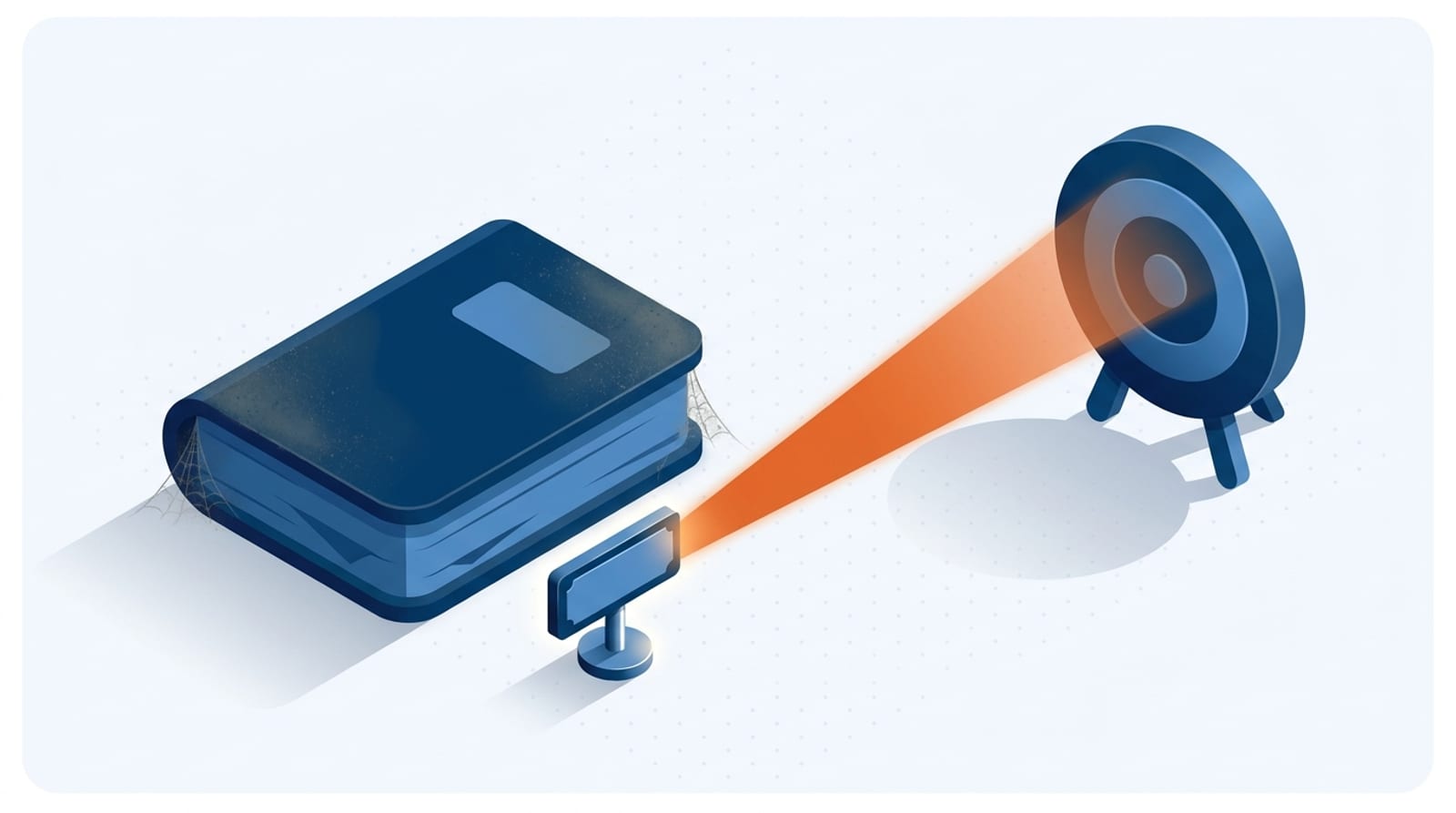
A model fed only with the judges' surnames, with no facts and no legal text, got 65% of the decisions right. The authors note that the judge's name probably works as a shortcut for section, period, case allocation and case profile.
The system had learned to recognize who was judging, not to reason about the case. And no aggregate metric of the time could notice the difference, because both produce the same score.
The same work showed the other side of the coin: when the test started respecting the order of time, training on the past to predict the future, accuracy plummeted. That number and what it means for jurimetrics (the statistical analysis of court decisions) are in What AI already does in legal work (and what it still gets wrong).
The question this raises for any evaluation, inside or outside the legal field, is always the same: is there a shortcut that produces the right score for the wrong reason? If there is, it will be found, because the system optimizes for what is measured.
The three controls that decide whether a number is worth anything
Independent consumer testing, the kind that evaluates cars and appliances, solved this problem decades ago. Legal AI cannot copy the whole model, because licensing usually prevents anonymous purchase of the product. But it can copy the three guarantees that support the method.
- AccessWho obtained the evaluated product. If the sample was set aside by the vendor, it does not represent what you will receive.
- FundingWho paid for the test. Sponsoring is acceptable and needs to be public; determining the score is not.
- ProtocolWho chooses the tasks, how many times each one runs, how it is scored and what is published. The party being evaluated cannot choose which failures are left out of the report.
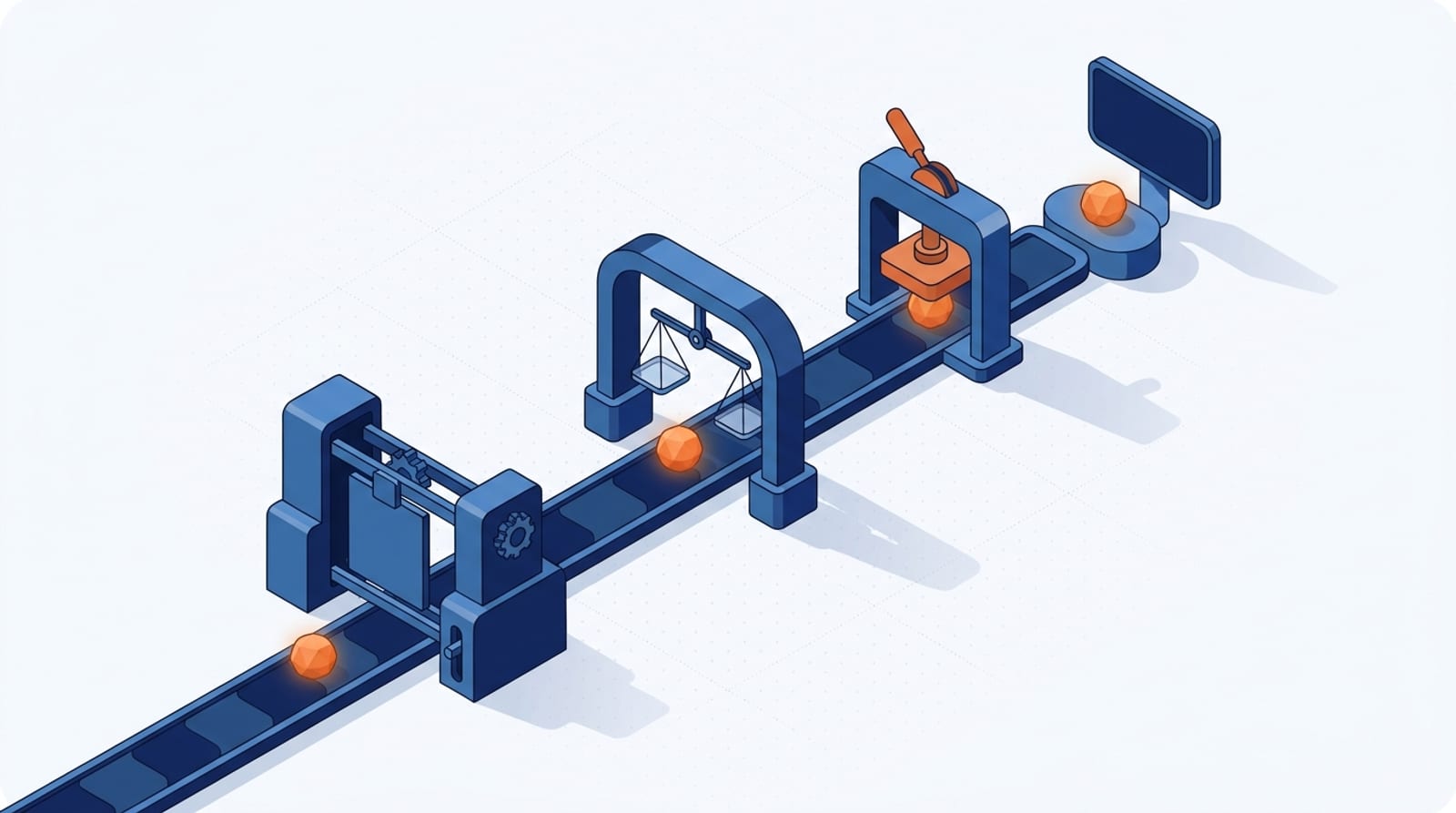
All three boil down to a single question that fits in any meeting: did the party being evaluated have any control over what was measured, how many times, and over what was disclosed?
If the answer is yes on any of these points, the number is marketing material, which does not make it false, just insufficient for deciding.
How to build your own test without it becoming a research project
The good news is that the test that decides your purchase is much smaller than an academic benchmark, because it only needs to cover your task.
- Gather real tasks that have already been solved, a few dozen, with the answer your operation considered correct at the time.
- Freeze the set and keep it separate. A set that changes between rounds turns comparison into luck.
- Write the pass criteria per task, item by item, before running anything. Criteria written afterwards become justification.
- Run each configuration more than once, at least three times. The variation between runs is real, and only by repeating can you see whether the difference between candidates is bigger than that variation. A small difference with few runs remains indistinguishable from noise.
- Read score and cost per task together, never separately, because the most expensive configuration is not always the one that gets the most right.
Step 3 is the one most people skip and the one that protects the most. Criteria written upfront turn a discussion of impressions into a count, and that count is what you will be able to repeat six months from now, when the vendor releases the next version.
It is worth saying that this measurement evaluates the whole system, not the model. That is the correct reading, because performance belongs to the whole, as shown in Why the same AI model gets 80% right in one place and 3% in another.
What AI evaluation still lacks, and medicine already has
There is a structural gap that helps calibrate the buyer's expectations. Medicine has had a reporting standard for clinical studies with artificial intelligence since 2020, published in Nature Medicine, which defines what every study needs to report to be comparable. According to the survey presented in St. Gallen, legal AI evaluation still has no equivalent registered in the same network of standards.
| What is missing | Practical effect on the buyer |
|---|---|
| Reporting standard | Two studies on the same tool are not comparable, because each reports different things. |
| Periodic retesting | A launch number keeps circulating years later, about versions that no longer exist. |
| Error taxonomy | An aggregate score without analysis of what type of error occurs, which is what decides whether the error is tolerable. |
| Annotated answer key | Building a reliable reference is expensive: a well-known set in the field consumed 10,000 lawyer hours. |
Until this exists, the reliable yardstick for your decision is the one you build. It is work, and it is less work than switching vendors the following year.
Questions for your next vendor meeting
- Against which group was this number compared, and on which part of the task
- Who chose the cases evaluated, who ran the test and who decided what to publish
- What is the date of the result and which exact version of the system was measured
- Did the test respect the order of time, or did it mix past and future
- Will you run this same test on my documents, with criteria I write
The last question is the one that separates a vendor from a partner. Those who work with measurement say yes immediately, because they already have the process. Those who sell numbers hesitate, and the hesitation is the information.
Sources and method
The basis of this article is the talk "Fifty Years of Legal AI", by Dr. Joel Niklaus, presented at the AI & Legal Reasoning Conference at the University of St. Gallen on August 28, 2026, and the sources it credits: OpenAI's GPT-4 Technical Report, from March 2023; Eric Martínez's recomputation published in Artificial Intelligence and Law 33(3), 2025; the study by Medvedeva, Vols and Wieling in Artificial Intelligence and Law 28, 2020; Vals AI's public legal performance leaderboard as read on August 19, 2026; Harvey's legal agents benchmark, from May 2026; and the CONSORT-AI standard published in Nature Medicine 26, in 2020.
The bar exam recomputation, the agent benchmark results and the compression of the public leaderboard were checked against independent sources during research carried out on September 1, 2026. All numbers are from third parties and none is an X-Apps measurement. OpenAI, Harvey and Vals AI are companies external to X-Apps, cited as objects of analysis and with no commercial relationship with us.
Frequently asked questions
Rarely. They are usually a favorable choice of yardstick, stated in a footnote. The same GPT-4 performance on the US bar exam was presented as the 90th percentile and recomputed to the 48th percentile when the comparison was made against those who passed.
Less and less. On a public leaderboard with 139 models updated in August 2026, the top ten fit within 2.25 points of the aggregate score. In that range, the order of the ranking says less than the difference by type of task.
It means training on the past and testing on the future, which is how the tool will be used. In a study predicting court decisions, average accuracy fell from 0.77 to 0.58 just by swapping random sampling for that time split.
Who obtained the product, who funded the test and who controls the protocol. The party being evaluated cannot choose the sample evaluated, cannot determine the score and cannot decide which failures are published.
Take a few dozen real tasks from your operation with an already known answer, freeze that set, write the pass criteria per task and run each configuration more than once. Only then are you comparing configurations instead of luck.
Because the result belongs to the whole system, not to the model. The surrounding code, the tools available and the delivery format change the score in a way comparable to switching models, and almost no sales material states which configuration was measured.